Builder License No:
512166802
512166802

This guide is for Tasmanian real estate agents who want smoother transactions: fewer surprises, fewer delays, clearer buyer expectations, and cleaner contract conditions.
It’s not theory — it’s a practical field guide built around what’s actually slowing deals down right now: how quickly buyers can secure inspections, how cleanly access and admin gets coordinated, and how confidently buyers can interpret what they’re seeing (and reading) without spiralling into uncertainty.

In October 2025, only 41% of inspections completed within 48 hours – down from 62% in January 2025.
When demand spikes, inspection windows shrink. The buyers who book early keep control of due diligence and negotiation timelines. The ones who don’t can lose leverage — or lose the property — simply because they can’t get their checks done within the timeframe they assumed would be available.
Tasmania has ~120 building inspectors (1.9% of national workforce). When activity spikes, the math doesn’t change – but your access to appointments does.
• Shorter windows to secure inspections, especially when multiple buyers are competing on similar properties at once.
• Less tolerance for delays — the small things matter more, like whether a tenant can provide access, whether keys are available, or whether power is on.
• Higher risk of buyers choosing the first available provider, which can lead to rushed, shallow inspections and a report that creates more questions than answers.
• More pressure on the agent to coordinate access quickly and manage expectations calmly, particularly in the last 48–72 hours of a due diligence window.
• Buyers accepting 5-7% price reductions instead of targeted repairs because they ran out of time to get proper quotes.
| Month | Avg lead time (business days) | % completed within 48 hrs | Notes |
| Jan 2025 | 2.1 | 62% | Post-holiday catch-up |
| Apr 2025 | 3.0 | 48% | Buyer-agent demand spike |
| Jul 2025 | 2.6 | 55% | Stable |
| Oct 2025 | 3.4 | 41% | Spring surge |
| Dec 2025 | 3.8 | 35% | End-of-year squeeze |
| Jan 2026 | 3.2 | 44% | Early-year pressure |
[highlight bg=”dark”]
Compared to early last year, there’s been a noticeable lift in buyer activity across a mix of price points, along with increased involvement from buyer’s agents and interstate buyers who are moving quickly when they see the right property. In practice, that means more offers moving into “serious due diligence” at the same time — and more competition for the same limited number of inspection appointments.
Tasmania has ~120 building inspectors (1.9% of national workforce). When activity spikes, the math doesn’t change – but your access to appointments does.
[/highlight]
Agent one-liner to use:
“If you’re serious about this property, let’s lock the inspection now — tight weeks compress timelines fast.”
Priority / Express includes

1. “The access squeeze”
Buyer waited until the contract condition started. Tenant access required 48 hours’ notice. The earliest inspection slot was available — but access wasn’t. Result: the inspection happened later than planned, the buyer had less time to digest findings, and negotiation became rushed and stressful.
Fix: book earlier and confirm access the same day as booking (keys, tenant notice, power availability, pets).
2. “The new-build assumption” [IMPORTANT: OFTEN OVERLOOKED]
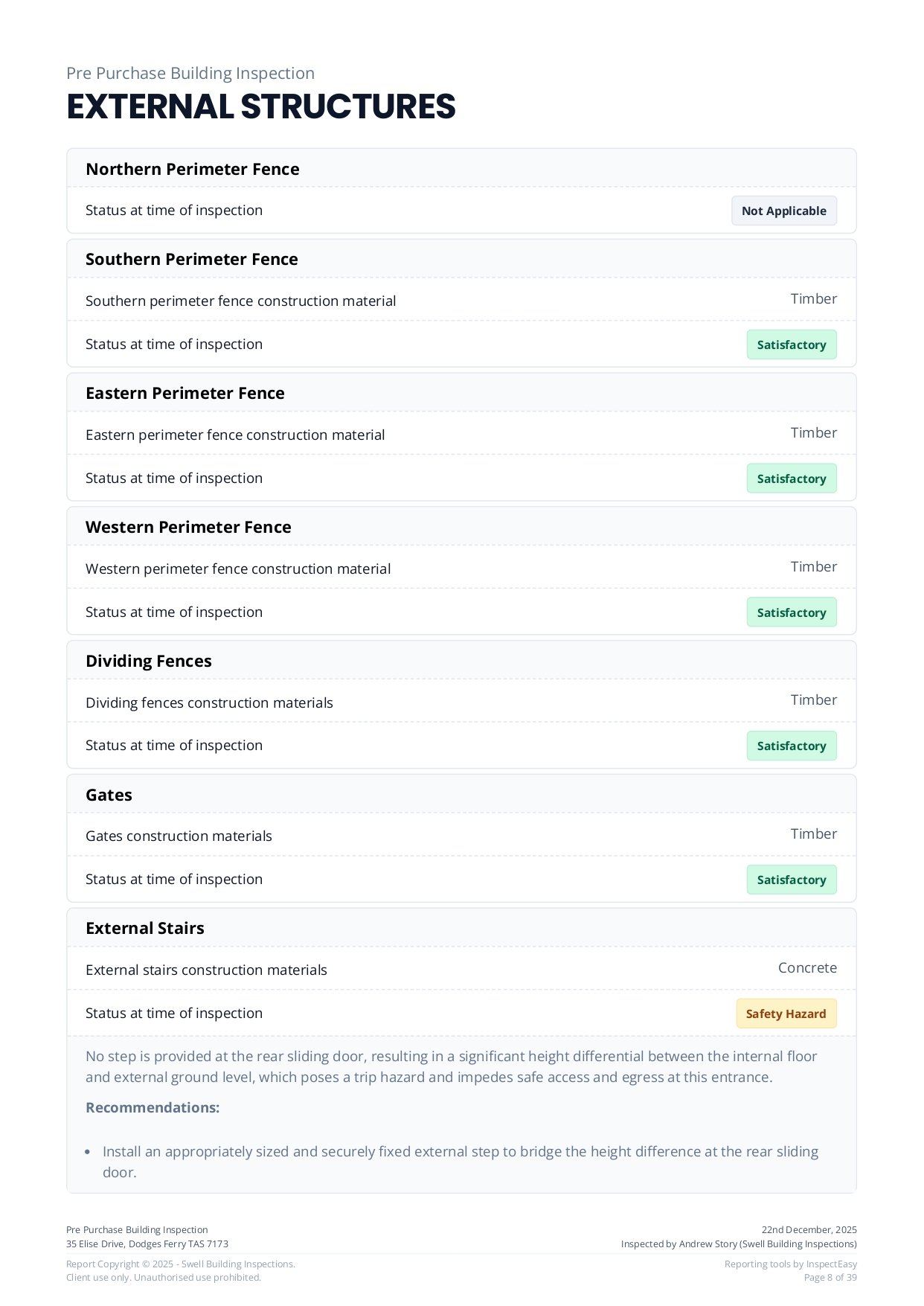
Buyer assumed “new = fine.” Inspection flagged poor drainage fall and ground levels too high at the cladding line. Result: targeted negotiation and a clear plan (what to rectify, what to monitor), rather than panic or guesswork.
Fix: make drainage and ground levels a standard talking point in buyer education, especially for newer builds and recent developments.
3. “The shallow report trap”
Buyer booked the first available inspector. The report had minimal photos and vague language, which created confusion and second opinions. That cost time and increased doubt, even though the property may have been fine.
Fix: steer buyers toward scope-first providers (time onsite, access checks, photos, prioritised summary, post-report clarification).
Cracking
Cracking can range from superficial settlement to something more significant. Inspectors look at crack pattern, width, location, and whether there are contributing factors like drainage or movement.
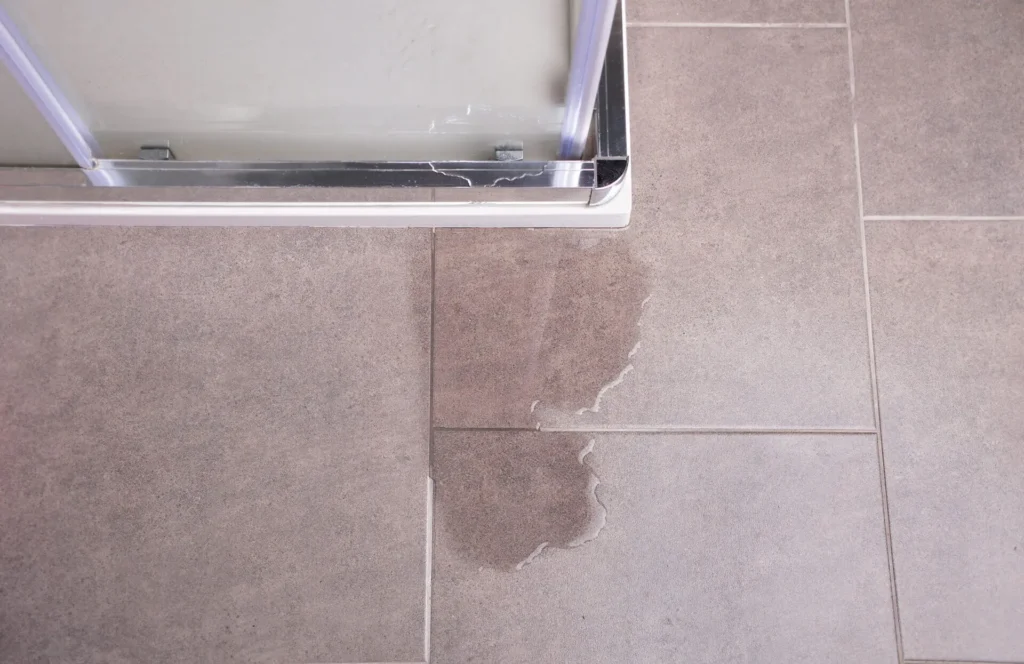
Waterproofing
Waterproofing issues aren’t always visible at an open home. Inspectors use moisture readings and look for signs like swelling, mould patterns, patching, or soft/loose flooring edges — and if accessible, check beneath wet areas.
Roofs
With older iron roofs, paint can sometimes mask early corrosion. A proper inspection checks the roof externally and confirms from inside the roof space (where accessible) — looking for rust at joints, leak staining, or daylight through gaps.
Is the moisture active now, or likely historic?
Is it likely localized (reseal/repair) or systemic (strip-out and re-waterproof)?
What’s the next step: monitoring, targeted repair, or specialist trades to quote?
[highlight bg=”dark”]
New doesn’t mean defect-free.
In newer or high-volume developments, we’re frequently seeing issues that don’t jump out at open homes — and don’t always show up in casual walk-throughs.
Common items we’re seeing more often include:
[/highlight]
[checkgroup title=”Scope” icon=”https://swellbuildinginspections.com.au/wp-content/uploads/2026/02/swell-check-icon.png”]
[/checkgroup]
[checkgroup title=”Process” icon=”https://swellbuildinginspections.com.au/wp-content/uploads/2026/02/swell-check-icon.png”]
[/checkgroup]
[checkgroup title=”Experience & Accountability” icon=”https://swellbuildinginspections.com.au/wp-content/uploads/2026/02/swell-check-icon.png”]
[/checkgroup]
[checkgroup title=”Timing” icon=”https://swellbuildinginspections.com.au/wp-content/uploads/2026/02/swell-check-icon.png”]
[/checkgroup]
[highlight type=”image-top” bg=”dark” image=”https://swellbuildinginspections.com.au/wp-content/uploads/2026/01/7d9e323f915eba4a177b3f4a8474cc6c-1024×683.jpg”]
1) “Inspection Ready” checklist (one page)
Send vendors/tenants a standard checklist: access points, pets secured, power availability, roof/subfloor entry arrangements. This prevents the “we arrived but couldn’t access” scenario that wastes everyone’s time and compresses buyer timelines.
2) One booking link + one source of truth
Use one template capturing: address, access notes, preferred times, urgency, and contact details. If your team is juggling multiple properties, this instantly reduces back-and-forth and makes bookings cleaner.
3) The 60-second buyer brief
Record a reusable explanation: what inspections cover, realistic timeframes, and how quickly reports arrive. This reduces repetitive calls and keeps buyers calm.
Mini-script:
“Here’s the process: book → inspect → report → quick call to clarify. The earlier we book, the more leverage you keep.”
[/highlight]
1) One system beats five
Use one tool or one thread to coordinate: booking time, access notes, invoicing, report delivery, and follow-ups.
2) 60 seconds of video beats 10 paragraphs of text
Record a reusable video covering: what inspections cover, realistic timeframes, and what buyers should expect in the report.
3) Use AI as a helper — not the authority
Use AI to summarise a report or create a buyer-friendly “what it means” paragraph — but never let AI replace qualified judgement
“Buyers think a building inspection is ‘a quick walk around’…
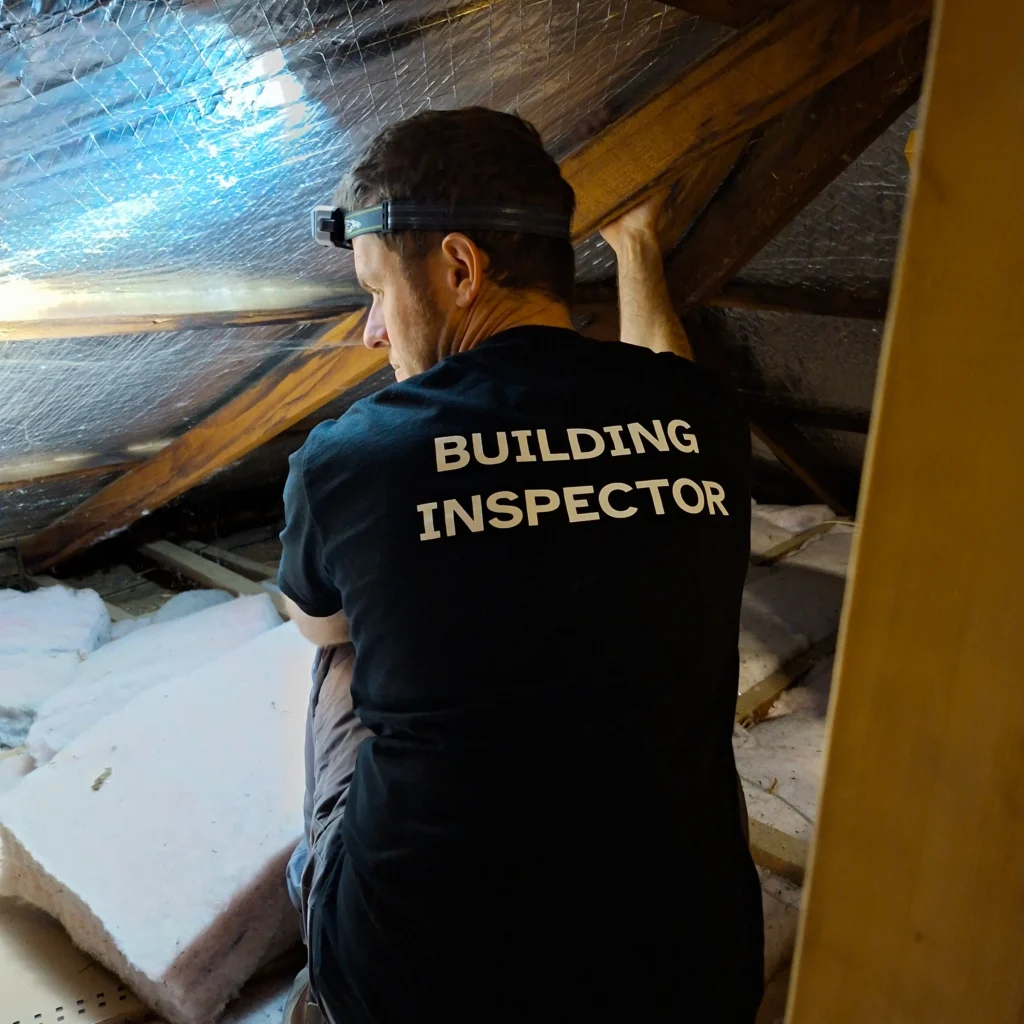
Meanwhile we’re checking drainage, roof space, subfloor, moisture risks — and the stuff you can’t see at an open home.
If you’re buying in Tassie in 2026, book early. Lead times are tighter than you think.”
#tasmaniarealestate #hobartproperty #buildinginspection #firsthomebuyer
“Myth: ‘It’s a new build, so it’ll be fine.’
Reality: new homes can still hide drainage issues, cladding problems, and wet-area risks.
An inspection isn’t about panic — it’s about clarity (and avoiding expensive surprises).
Want a buyer checklist? DM ‘CHECKLIST’.”
#realestateagents #propertytips #tasmaniahomes #duediligence
The agents who perform best in tightening markets are the ones who anticipate pressure points early: inspection lead times, admin friction, and buyer education gaps. They don’t wait for the deal to feel stressful before acting — they build small systems that keep the process calm when the market speeds up.
At Swell Building Inspections, our focus is simple:
If you’d like current lead times, a buyer checklist you can send instantly, or to understand how our multi-inspector model supports faster bookings — reach out anytime.
[highlight bg=”dark”]
How long does a building inspection take?
A thorough inspection takes long enough to properly assess accessible areas, key wet areas, and external drainage/ground levels, and to document findings with photos. If someone is quoting unusually fast timeframes, it’s worth asking what might be excluded (roof space, subfloor, drainage checks, or detail-level reporting).
What’s the biggest issue buyers miss at open homes?
Drainage and ground levels around the home, subfloor/roof space (where accessible), and early moisture-risk indicators in wet areas. These are common “invisible” issues that can have real long-term implications if ignored.
Is a new build always low risk?
No. New builds can still have drainage, cladding, and wet-area risks—often from rushed finishes, site set-out issues, or detailing errors that aren’t obvious without inspection.
Should buyers book before or after contract?
As early as possible once intent is real. Early booking protects due diligence timing and reduces negotiation stress. In tight periods, the difference between booking early and late can be the difference between clarity and compromise.
Do all inspectors check roof space and subfloor?
Not always. Buyers should ask directly what’s accessed (and what isn’t), and whether the report prioritises findings clearly so they can understand what matters most.
[/highlight]
ABS — National, state and territory population (June 2025): https://www.abs.gov.au/statistics/people/population/national-state-and-territory-population/latest-release
NAB — Hobart Property Market Insights (Nov 2025 PDF): https://www.nab.com.au/content/dam/nab/documents/reports/loan/hobart-property-market-insights.pdf
NAB — National Property Market Insights (PDF, includes rents/yields context): https://www.nab.com.au/content/dam/nab/documents/reports/loan/national-property-market-insights.pdf
NAB Business View — Australian Housing Market Update (Nov 2025): https://business.nab.com.au/nab-australian-housing-market-update—november-2025
REIT — Regional Media Releases (June Quarter 2025, State): https://reit.com.au/media-releases/regional-media-releases-june-quarter-2025-state/
REIT — Regional Media Releases (June Quarter 2025, South): https://reit.com.au/media-releases/regional-media-releases-june-quarter-2025-south/
Tasmanian Treasury — Building Approvals (PDF): https://www.treasury.tas.gov.au/Documents/Building-Approvals.pdf
ABS — Building Approvals, Australia (latest release hub): https://www.abs.gov.au/statistics/industry/building-and-construction/building-approvals-australia/latest-release
Jobs and Skills Australia — Building Inspectors (ANZSCO 312113): https://www.jobsandskills.gov.au/data/occupation-and-industry-profiles/occupations/312113-building-inspectors