Builder License No:
512166802
512166802

A Reddit user posted a video of a moisture meter maxing out on a plasterboard wall beside their front entrance. The house was built in 2000. There was no visible damage, no swelling and no staining. Yet the meter said the wall was soaking wet.
“What could cause a high moisture reading in a relatively protected entrance like this?” they asked. “What would you investigate to work out the source?”
Andy from Swell Building Inspections answered it for host Jordan in our Pro Insights series. His first answer may surprise you: the meter might be wrong.
Here’s the short answer: a high moisture reading on its own doesn’t prove there’s water in the wall. Some materials, like certain tiles and the steel inside plasterboard walls, can make a meter read 100% when everything is dry. What matters is visible damage, and whether one area reads much higher than the same material nearby.
“Moisture meters can do funny things,” Andy says. “If you don’t know why they behave certain ways around certain materials, it can be misleading.”
Common causes of false high readings include:
A moisture meter is only one tool. Andy says the main thing inspectors look for is visible signs of moisture damage:
If none of those signs are present, a high reading on its own is less likely to mean a real problem, although you can’t be sure without seeing the property.
Andy has seen newer homes with genuinely high readings low on certain walls. Usually the cause is outside the house:
Water pooling against the house because the ground doesn’t drain away from it properly.
Concrete paths or paving poured too high against an external wall, especially against cement sheet cladding, can push moisture into the wall.
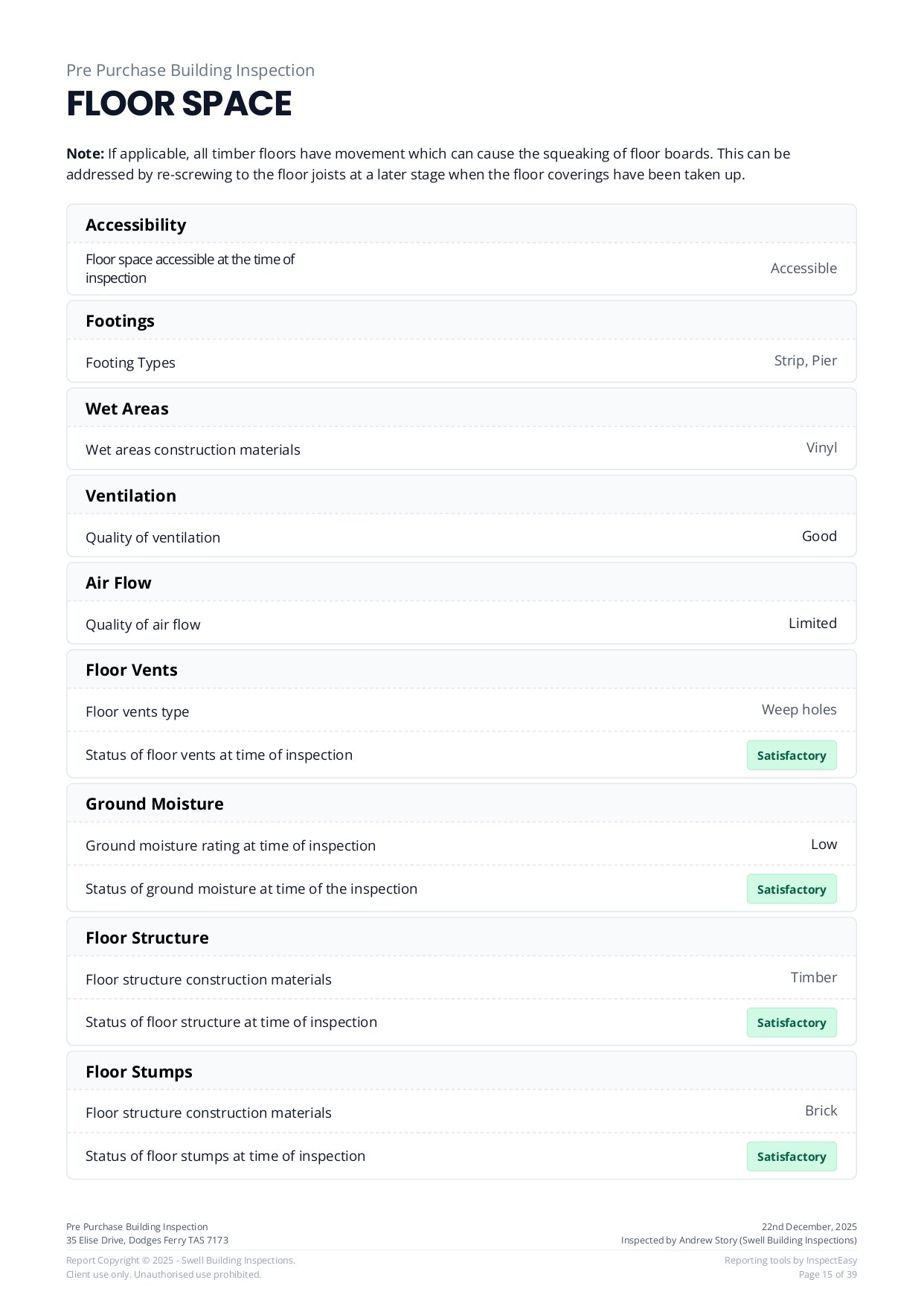
Brick veneer homes have weep holes near the bottom of the brick wall. They let moisture drain out of the wall cavity and let air circulate. If a path or garden bed covers them, moisture gets trapped inside the wall.
If the readings are highest near a window or door, look outside for gaps or failed seals that let rain in.
In masonry walls, salts and moisture drawn up from the ground can cause high readings.
In Tasmania’s cooler, damper climate, moisture problems are among the most common things a building inspection turns up, which makes reading them accurately all the more important.
So how do inspectors tell a real problem from a false reading? Andy describes the approach Swell uses on every inspection:
“You can’t just stick a moisture meter on a certain wall and go, ‘Oh, that’s too high,'” Andy says. If the whole wall reads the same and there’s no damage, it may simply be the material, not water.
It’s a scientific approach: compare against a control rather than trusting a single number.
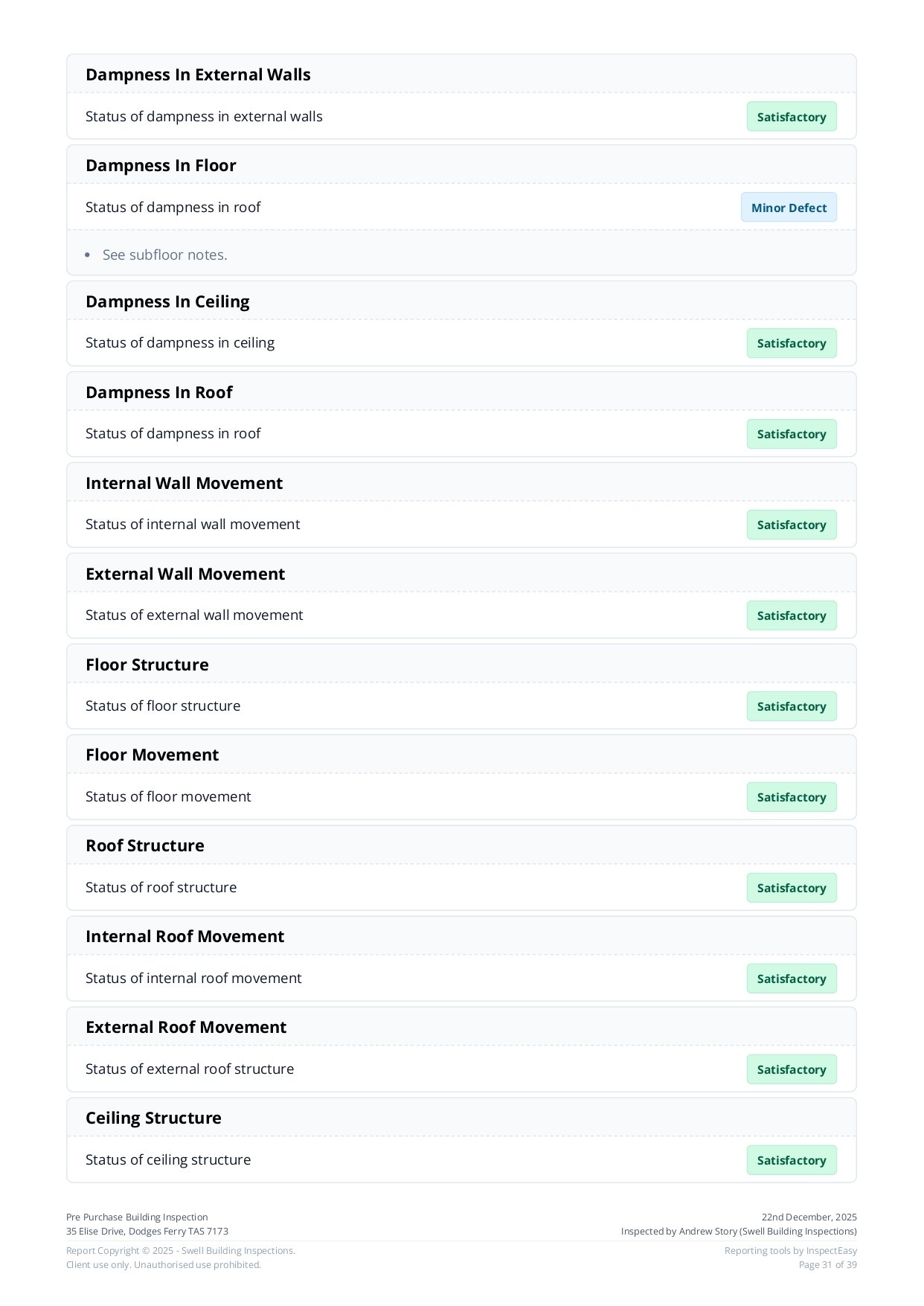
Some materials, including certain tiles and the steel frames and trims inside plasterboard walls, can cause a meter to read 100% even when there’s no moisture.
Common causes include poor site drainage, paths or garden beds built up against the wall, blocked weep holes, and rising damp in masonry walls.
A good inspector takes baseline readings across similar surfaces to see what’s normal, then investigates any areas that read much higher. They combine meter readings with visual checks for swelling, staining and blistering.
It depends on the cause. A reading caused by the material itself is harmless. A reading caused by a leaking shower or poor drainage needs fixing. Get an experienced inspector to find out which it is.
A moisture meter is a useful tool, but it’s not the whole story. Readings need context: a baseline for the material, a look for visible damage, and a check of what’s happening outside the wall. Swell uses moisture meters and, where relevant, thermal imaging as part of a methodical inspection, looking for the cause rather than just the number.
Andy is a licensed builder with over 15 years of hands-on experience. Every Swell inspection comes with a plain-English report, usually within 24 hours, and a follow-up call to walk you through the findings.
Ready to book? Book your pre-purchase inspection or call 0483 935 688.