Builder License No:
512166802
512166802

A couple in Perth posted on Reddit after their building and pest inspection. The report said everything was fine overall, with some minor structural issues. They were still panicking.
“Literally every room in the house has cracks,” they wrote, and two of them looked particularly worrying. They were putting all their savings into the deposit. To make it harder, their contract didn’t allow a second inspection, so they felt trapped.
Andy from Swell Building Inspections talked it through with host Jordan in our Pro Insights series.
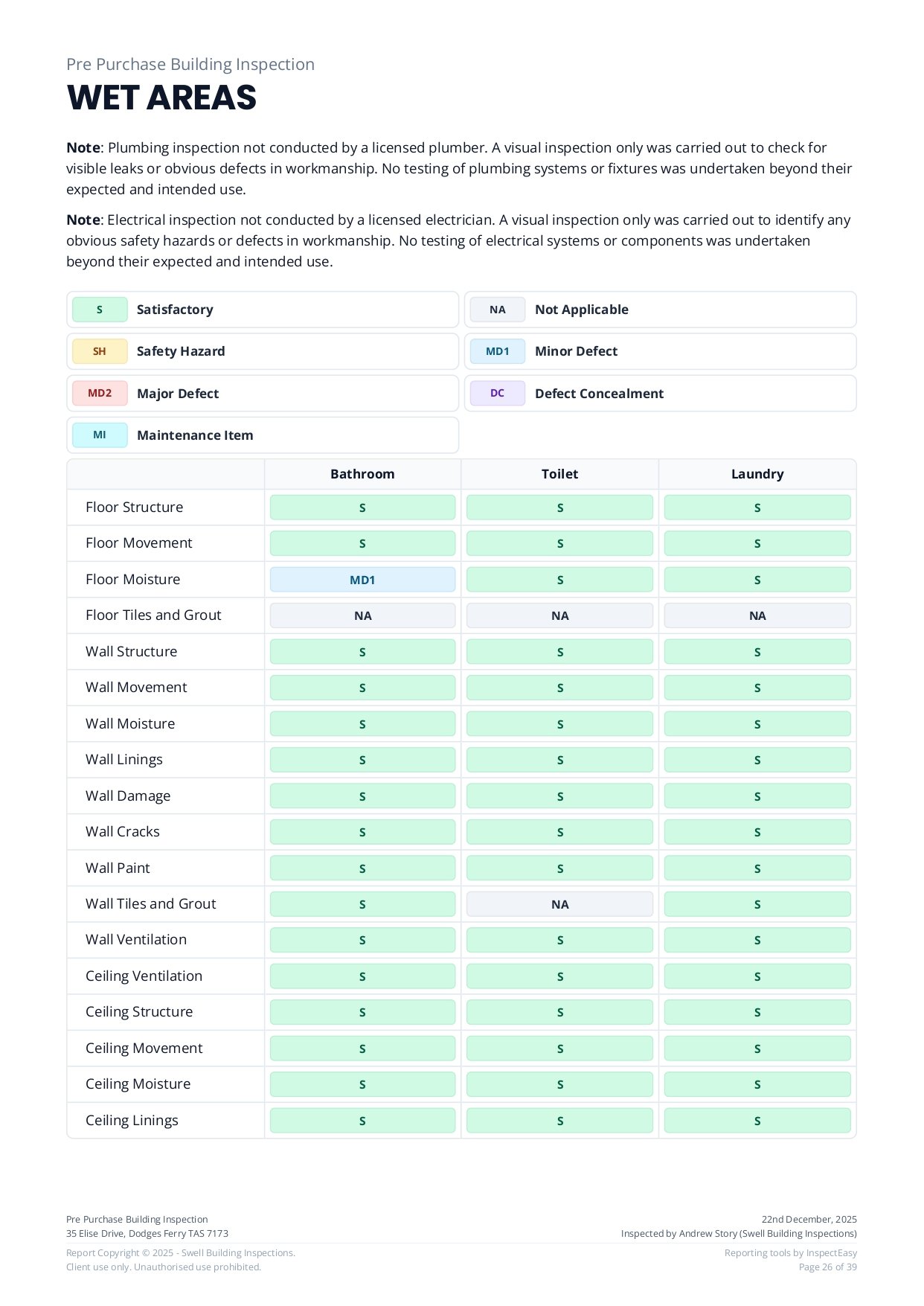
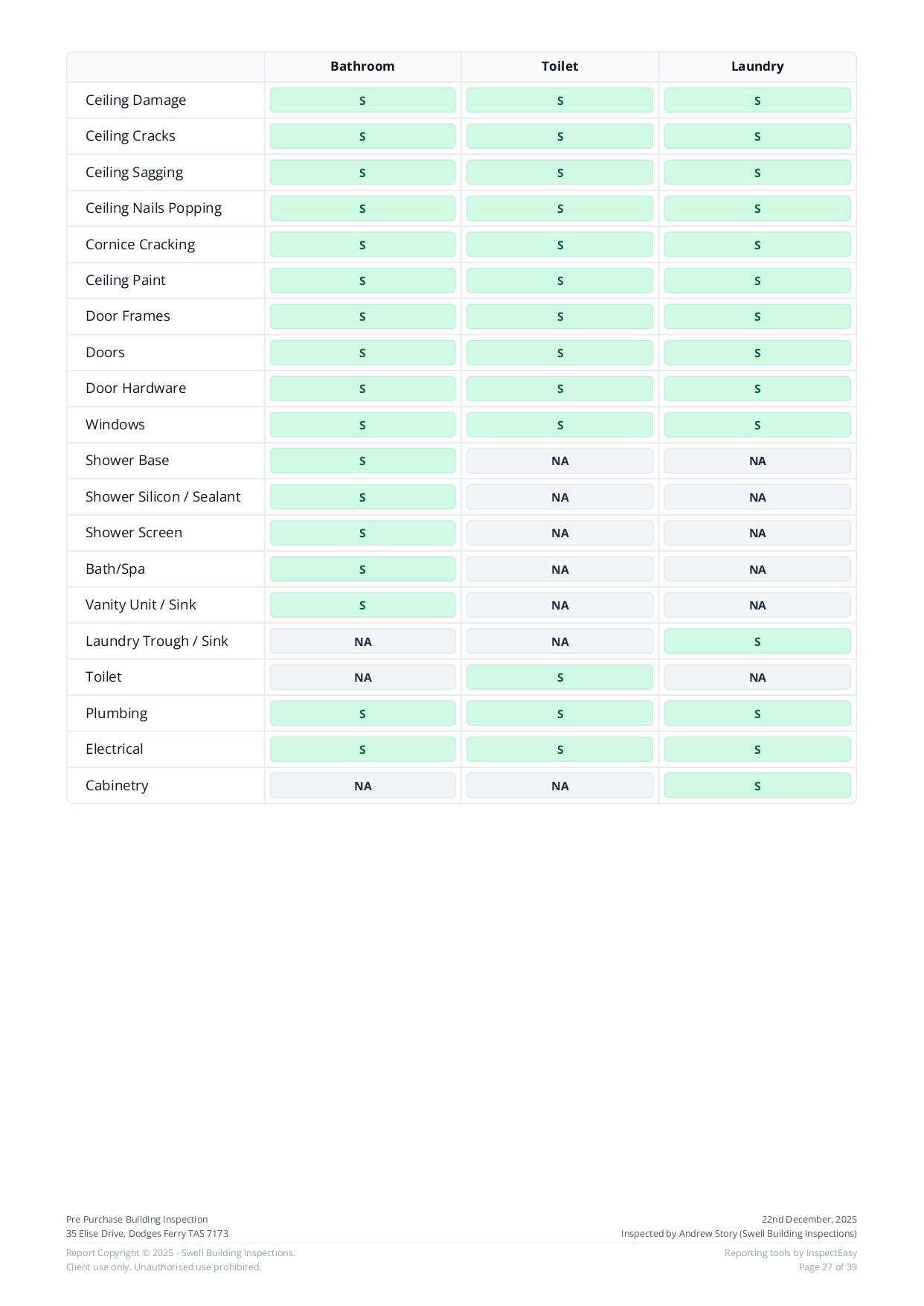
Here’s the short answer: most cracking in houses is cosmetic, but you can’t tell by looking at the crack alone. A good inspector looks at what’s around it, such as door and window gaps and how they operate, to work out what’s causing it. If you’re unsure, use your inspector’s follow-up call properly: have the report open and ask them to explain the severity of each defect that worries you. Serious structural cracking can cost $10,000 or more to repair.
Andy’s first piece of advice comes before the inspection even happens. Do your due diligence when choosing an inspector, and ask:
“That sort of thing’s really important,” Andy says, “to be able to have that follow-up conversation with your inspector.” Some inspectors, unfortunately, will “drop and run”.
If your inspector offers a follow-up call, make the most of it:
It’s also worth asking whether each crack is structural or cosmetic. That one question tells you a lot about how worried you need to be.
What you can do next, such as negotiating or withdrawing, depends on your contract’s clauses, and these vary from state to state. Check yours with your conveyancer.
Andy can’t judge the Perth cracks from photos alone. Some Reddit commenters put them down to typical Perth settlement, and that might be right. But an inspector needs to see the whole building.
Common cosmetic cracking includes:
What an inspector checks around a crack:
“We’re not just looking at the crack,” Andy says. “We’re looking at all these other things around it as well.”
The worst cracking Andy sees is walls on the verge of falling over.
The week this episode was recorded, he inspected a property in the Hobart area with an older brick garage. One wall had bellied outwards by about 50 mm. The cracking in the brickwork was visible, and when Andy touched the wall, it moved.
That wall was holding up the garage roof. If it let go, which Andy says would inevitably happen at some point, the roof would come down with it. It was a major safety concern.
He also sees severe cracking in areas with highly reactive clay soils, where settlement opens cracks “that you can put your finger through”. Reactive clay is found in pockets around Hobart and Launceston.
If you’re not experienced in building or engineering, Andy recommends getting an expert to assess the cracking. Repairs fall into two broad groups.
Minor cracks can be patched. In older homes, seasonal movement means they may keep coming back around doors and windows, so expect some ongoing touch-ups. That’s annoying, but it isn’t structural.
Larger cracking, particularly in brickwork, can point to foundation settlement. Then the questions become which parts of the house are affected and whether underpinning is needed.
For the Hobart garage, the fix meant rebuilding the brick walls and assessing the foundations, possibly underpinning them before rebuilding. That’s north of $10,000.
For a closer look at underpinning methods and what they cost, see our post on cracks in your house: structural problem or easy fix?
The right call depends on the buyer. The garage buyer was an elderly woman who couldn’t do the work herself and didn’t have spare cash for repairs, so she walked away.
A younger buyer who wasn’t attached to the garage might simply remove it and go ahead. “It’s just a case-by-case scenario,” Andy says.
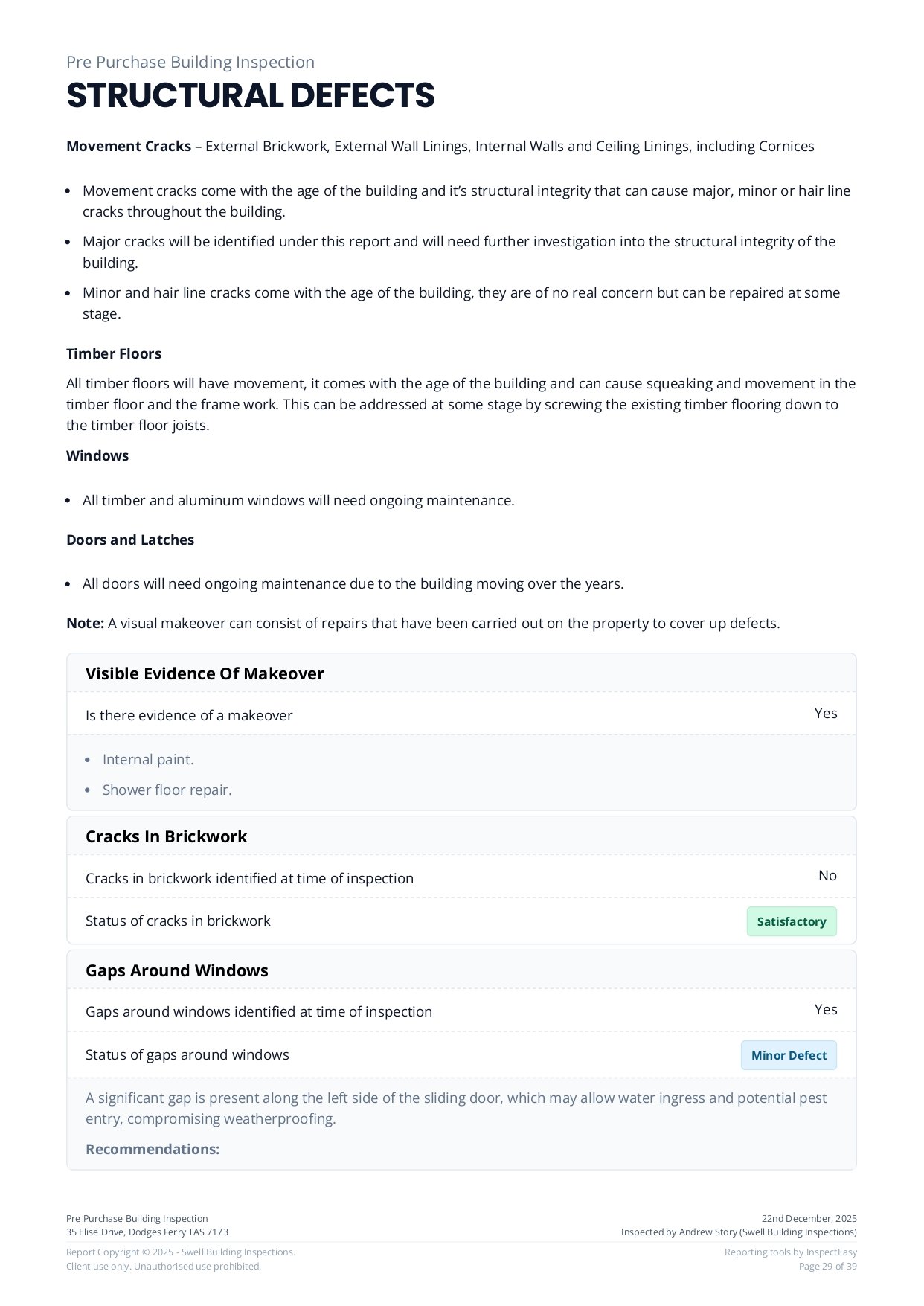
Fresh plaster in a crack doesn’t mean the problem is fixed. Swell has been called to a house that the owners bought a year earlier. The cracks had been patched for the sale. A year later, the plaster was being pushed out as the cracking worsened.
“We didn’t know that there was a structural issue,” the owners said. Check what’s causing a crack before you, or anyone else, fills it.
You often can’t tell from the crack alone. Inspectors look at its size and pattern, plus surrounding signs such as gaps around doors and windows and whether they still operate properly. Wide cracks, cracks that keep growing, and bulging walls are more likely to be structural.
Minor cracks are common, especially above windows, along plasterboard joints and in older homes that move with the seasons. Many are cosmetic and can be patched.
Ask whether each crack is cosmetic or structural, how serious it is, why it was reported the way it was, and whether it should stop you from proceeding.
It depends on the cause and extent. Rebuilding a damaged brick wall and assessing or underpinning its foundations can cost $10,000 or more.
Use your first inspector fully. Book a follow-up call, go through each defect that worries you, and check your contract options with your conveyancer.
Cracks are one of the most common worries for buyers, and most turn out to be cosmetic. The ones that aren’t can be expensive. Choose an inspector who looks beyond the crack, and who will talk you through what they found.
Andy is a licensed builder with over 15 years of hands-on experience. Every Swell inspection comes with a plain-English report, usually within 24 hours, and a follow-up call to walk you through the findings. See our 2026 Hobart pricing guide for inspection costs.
Ready to book? Book your pre-purchase inspection or call 0483 935 688.