Builder License No:
512166802
512166802

A buyer on Reddit had finally found a place in an established part of Werribee, in Melbourne’s west. Then the building and pest report came back, and their advisors couldn’t agree on it.
Their buyer’s agent said the defect wasn’t a major problem and could be easily tackled. Their conveyancer said it was a major defect and suggested they might rescind the contract. “Now I’m confused whether or not to proceed,” they wrote.
Andy from Swell Building Inspections talked it through with host Jordan in our Pro Insights series.
Here’s the short answer: when your advisors disagree about a defect, go back to the person who found it, your building inspector. A moisture problem near a shower can be a $300 silicone job or a $20,000-plus bathroom renovation, and the inspector is best placed to tell you which, or to tell you which specialist to call. Don’t leave it until your building clause is about to expire.
One of the first Reddit comments gave the right advice, Andy says: talk to your building inspector. “That would be your first thing to do, is to have a phone conversation with the person who did the building inspection in the first place.”
Your buyer’s agent and conveyancer weren’t at the inspection. Your inspector was, and they can explain why they rated the defect the way they did.
“It’s not just a matter of what’s written on the page,” Andy says. A report isn’t always 100% clear to someone reading it, and that’s when the phone call matters.
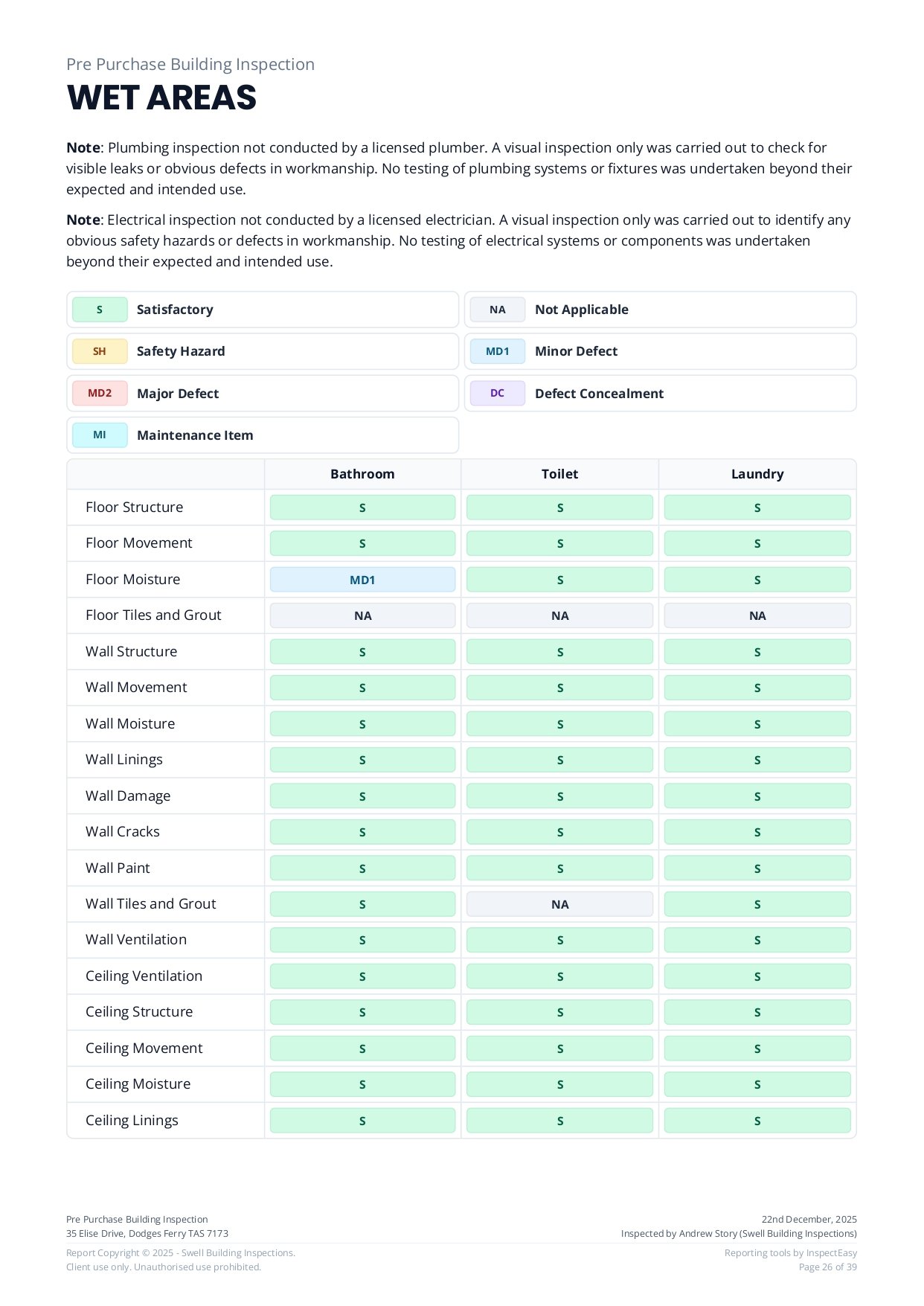
Andy couldn’t see the property, but disagreements like this often come down to moisture around a bathroom. The same signs can have very different causes.
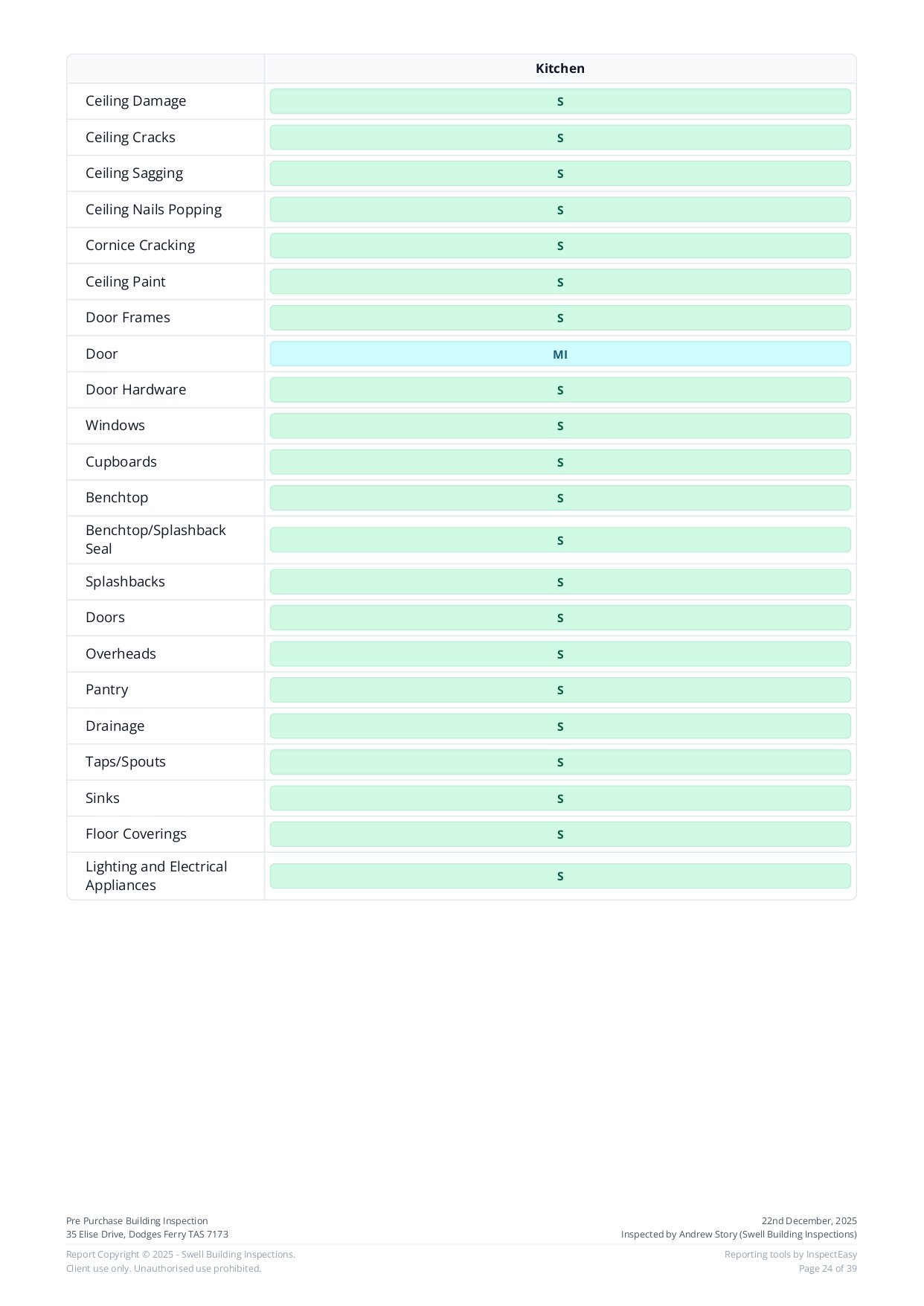
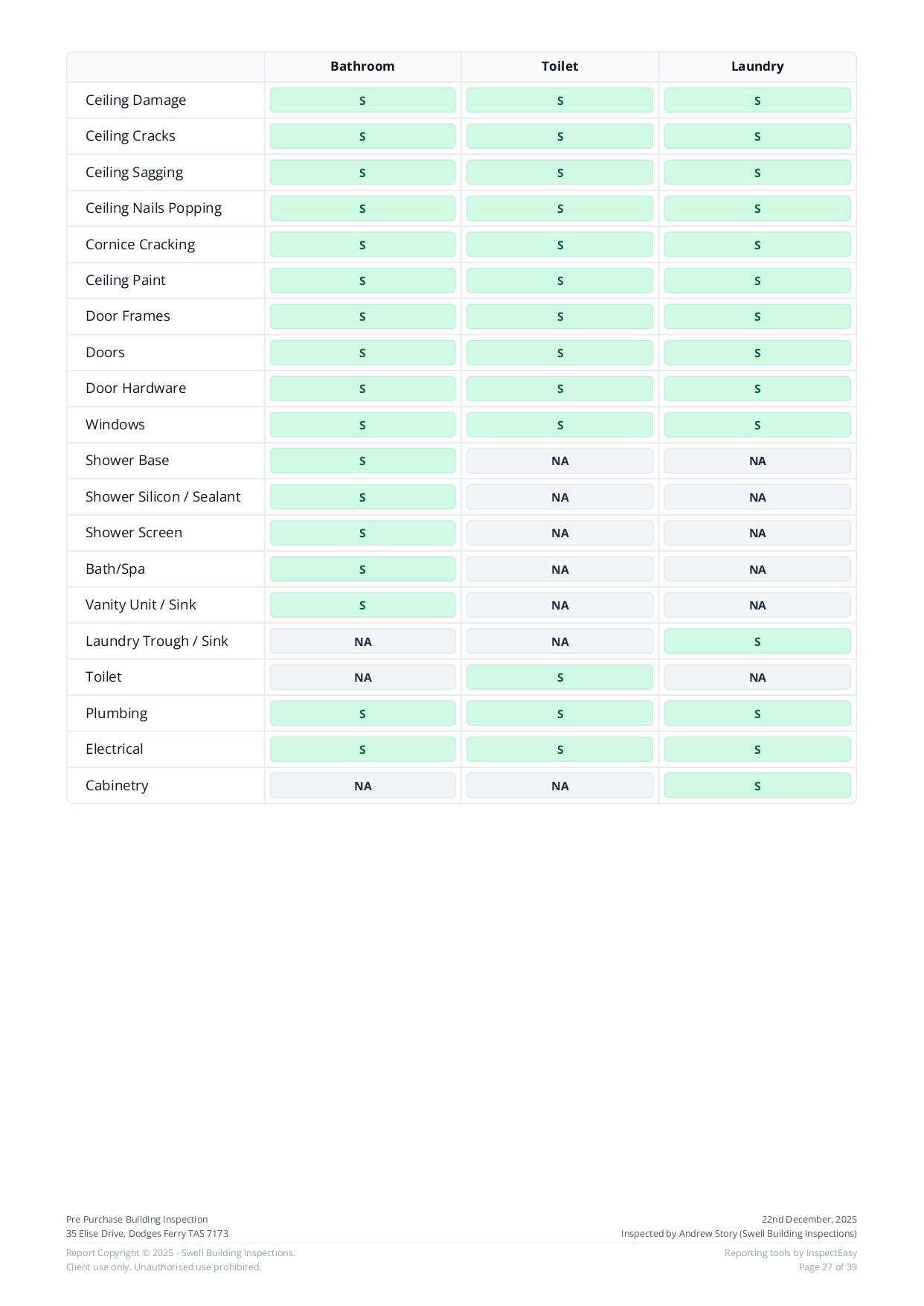
Swell often finds moisture outside a shower caused by deteriorated silicone around the shower screen. That moisture can damage something nearby, such as a door frame, without any problem with the waterproofing itself. The fix is to re-silicone the shower.
The worst Andy sees is when moisture isn’t limited to a silicone issue. The waterproofing has failed, water has spread through the bathroom floor, the substrate is deteriorating, and framing may be starting to rot. He has photographed water staining under a wet area that spread well beyond the shower.
That’s not a simple fix. It means a substantial renovation, and if it’s done properly, it has to meet current codes and standards, including proper waterproofing.
Moisture can also come from a plumbing leak inside a wall. On one inspection, Swell found high moisture and staining below a vanity, though not in the wall itself. It turned out to be a minor plumbing leak.
In cases like that, your inspector may recommend a plumber, who can test for leaks in the wall.
“Moisture is not just going to come from one particular place,” Andy says. “It could come from a number of those places, or multiple places.”
| Problem | Typical fix | Indicative cost |
|---|---|---|
| Worn silicone, minor grout wear | Strip and replace silicone, repair grout | $300–$400, up to $600–$700 for larger areas |
| Failed waterproofing | Bathroom renovation to current standards | From $20,000 for an entry-level bathroom; builders rarely quote under $25,000–$30,000 |
There are specialists whose whole job is resealing showers, so it’s worth getting a couple of prices for the smaller fix.
Building inspection clauses in contracts have deadlines, and the rules vary from state to state.
Andy recalls a client Swell had advised to arrange a more invasive investigation, because the moisture evidence wasn’t conclusive. Swell discussed it with them by phone. But they didn’t follow up, and contacted Swell in a panic the day before their building clause was due to expire.
If your inspector recommends further investigation, book it straight away.
Not every inspector offers a follow-up conversation, so check before you book. Andy believes inspectors should keep talking to clients “until you are 100% clear on what we’ve told you.” Your inspector should also recommend what to do next, not just list the defect.
For more on reading your report, see our guide to minor issues vs major problems in a building inspection report.
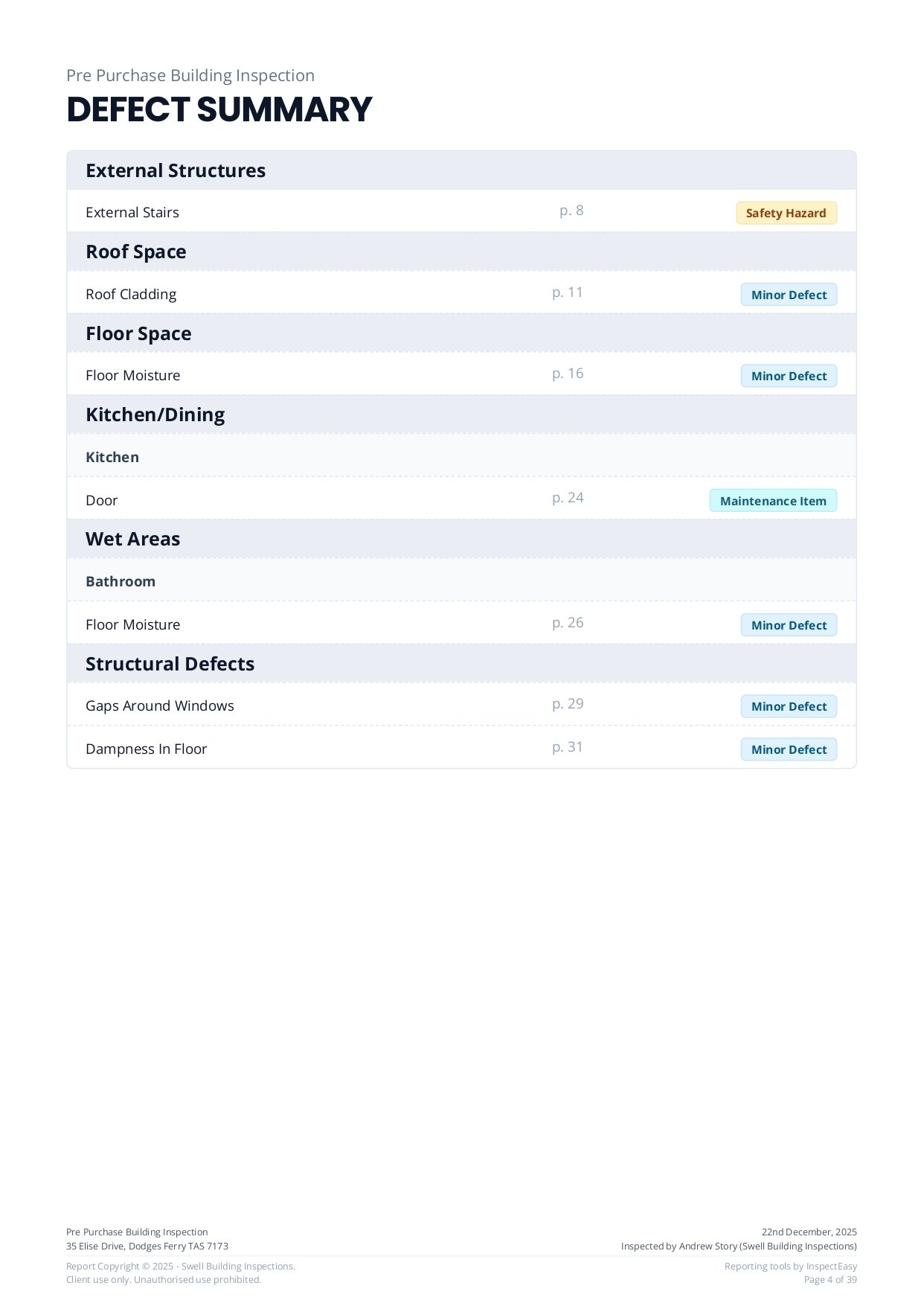
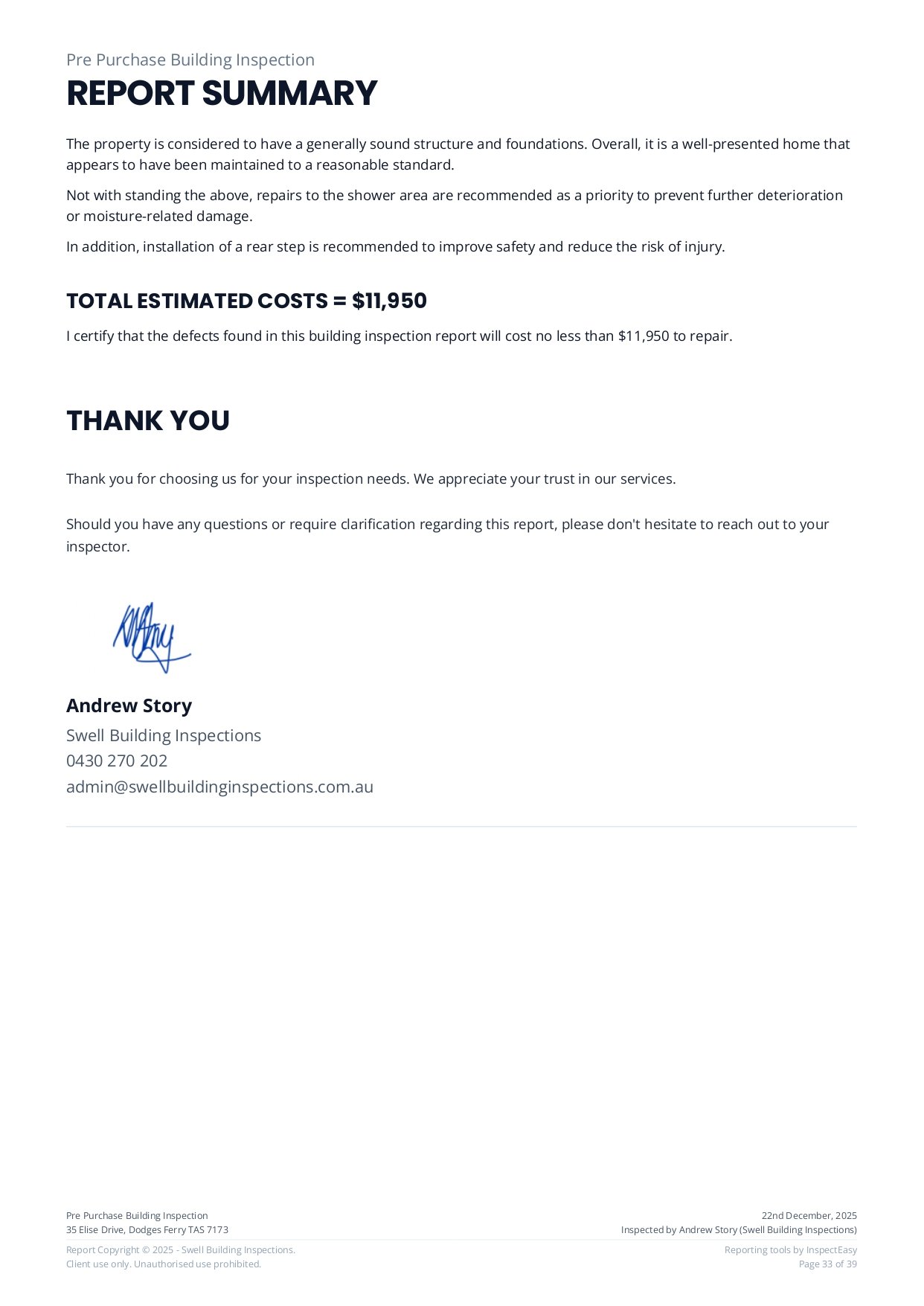
Your building inspector classifies defects in the report, based on what they saw. If your buyer’s agent or conveyancer reads it differently, ask the inspector to explain their reasoning.
Often the best next opinion is a specialist your inspector recommends, such as a plumber to test for a leak or a waterproofing specialist. Ask your inspector which kind of expert fits the problem.
Usually around $300 to $400, and up to $600 to $700 depending on the size of the area and any grout repairs.
An entry-level bathroom renovation starts at around $20,000, and many builders now quote $25,000 to $30,000 or more for work to current standards.
That depends on your contract and your state. Talk to your conveyancer early, and arrange any recommended investigations well before the deadline.
When your advisors disagree about a defect, the answer is usually one phone call away. Your building inspector saw the problem first-hand and can tell you whether it’s a $300 fix or a $30,000 one, and who to call next.
Andy is a licensed builder with over 15 years of hands-on experience. Every Swell inspection comes with a plain-English report, usually within 24 hours, and a follow-up call to walk you through the findings. See our 2026 Hobart pricing guide for inspection costs.
Ready to book? Book your pre-purchase inspection or call 0483 935 688.