Builder License No:
512166802
512166802

What a Practical Completion Inspection Covers and Why Hobart Home Builders Need One Before Handover
You’ve waited months – maybe longer. The frame went up, the roof went on, the kitchen finally started looking like a kitchen. Now your builder sends you a message: the build is at practical completion and it’s time for handover.
This is the moment you’ve been working towards. But it’s also the moment where a lot of Tasmanian home builders make a costly mistake. They get excited, sign off on the build, make that final payment and only then start noticing the problems.
A crooked door frame. Cracked tiles in the ensuite. Gaps in the skirting boards. Paint runs on the ceiling. Or worse waterproofing that wasn’t done properly, but you can’t see it because it’s hidden behind fresh tiles.
A practical completion inspection (PCI) is your chance to catch these issues before you accept the keys. It’s the independent, professional check that sits between your builder’s “we’re done” and your signature on the dotted line.
Here’s what you need to know before that handover day arrives.
Practical completion is a formal stage in the building process. It means your builder considers the home substantially finished and ready for you to move in. There might still be a few minor items to sort out, but the home should be safe, liveable, and built to the agreed plans.
Here’s the important bit: once you accept practical completion, a few things happen at once. Your final payment becomes due, and it’s usually the biggest one. The defect liability period starts ticking. And your builder’s obligation to fix problems shifts from “everything” to “defects that show up within the warranty period.”
That’s why this inspection matters so much. Once you sign off, your negotiating position changes dramatically.
Building in Hobart and across Tasmania comes with its own set of challenges. The climate alone creates conditions that can expose poor workmanship faster than in many other parts of Australia.
Tasmania’s cooler, wetter climate means moisture management is critical. Condensation inside wall cavities, poor subfloor ventilation, and inadequate roof space exhaust systems can all lead to mould, timber rot, and insulation damage over time. Recent changes to Tasmanian building regulations now require vapour-permeable sarking in new builds – a type of building wrap that lets moisture escape from wall cavities. If this hasn’t been installed correctly, the issues won’t show up for months.
Coastal exposure, hillside foundations, and older infrastructure connections in some Hobart suburbs add further complexity. These aren’t problems you’d spot during a quick walk-through with your builder.
There’s another reason to get independent eyes on your build. The Australian construction sector has been under significant strain.
According to ASIC data, 2,832 construction companies entered insolvency during the 2023-24 financial year. That’s a 28% increase from the year before, and the construction sector accounted for roughly 27% of all company failures nationally more than any other industry.
What does this mean for home builders? When building companies are under financial pressure, corners can get cut. Trades get rushed. Supervision gets thinner. None of this means your builder is doing the wrong thing but it does mean that independent verification of the finished product has never been more important.
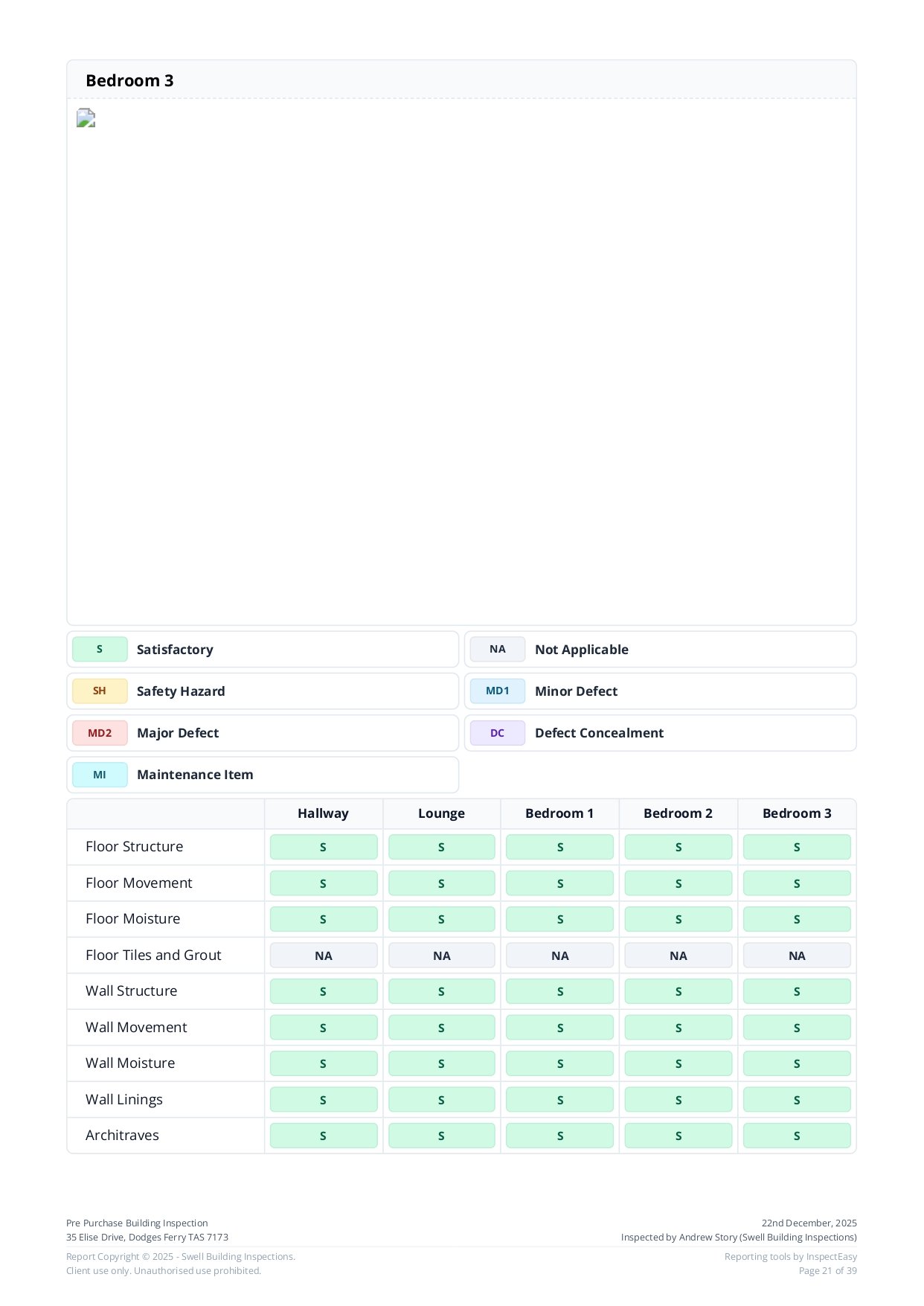
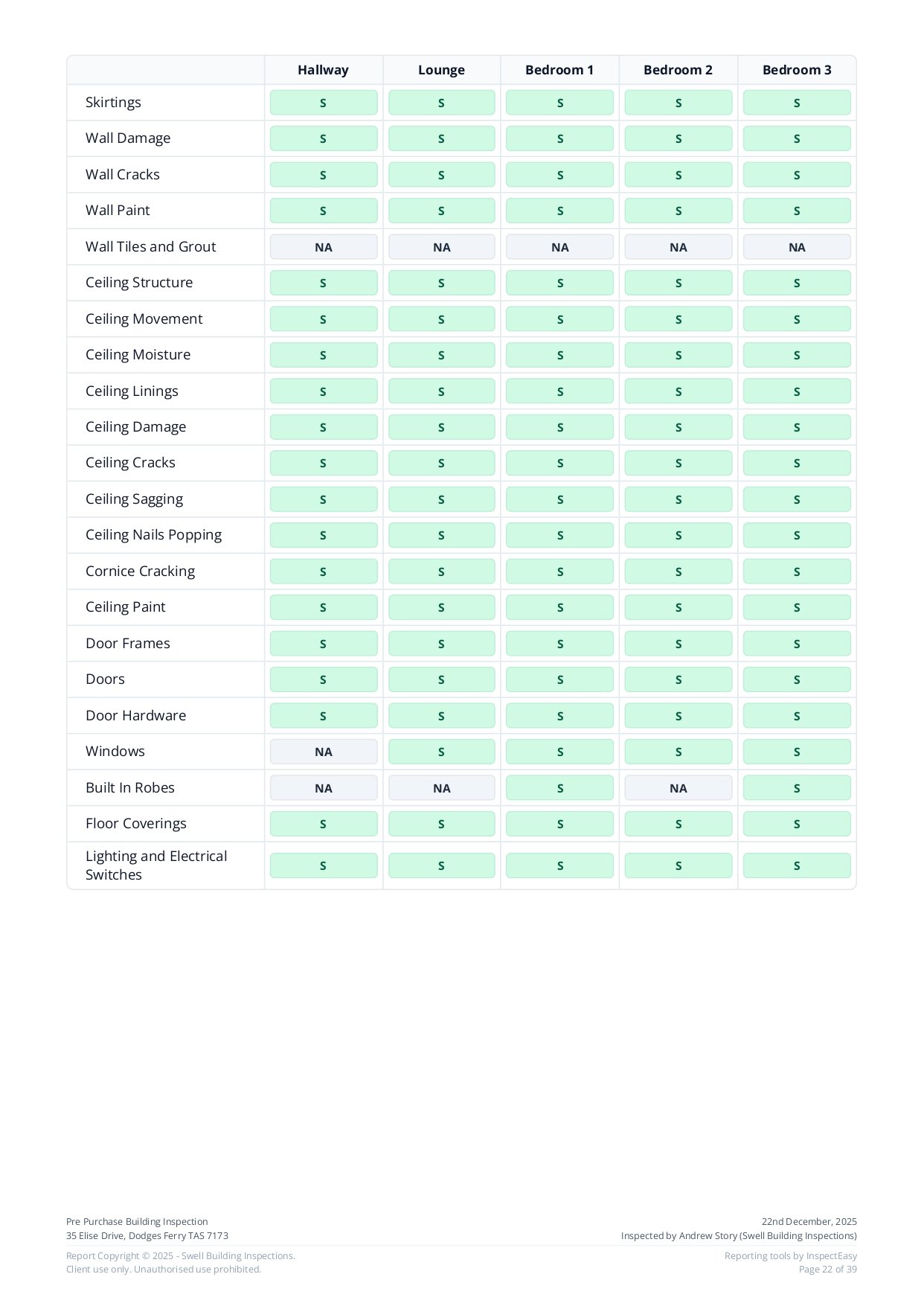
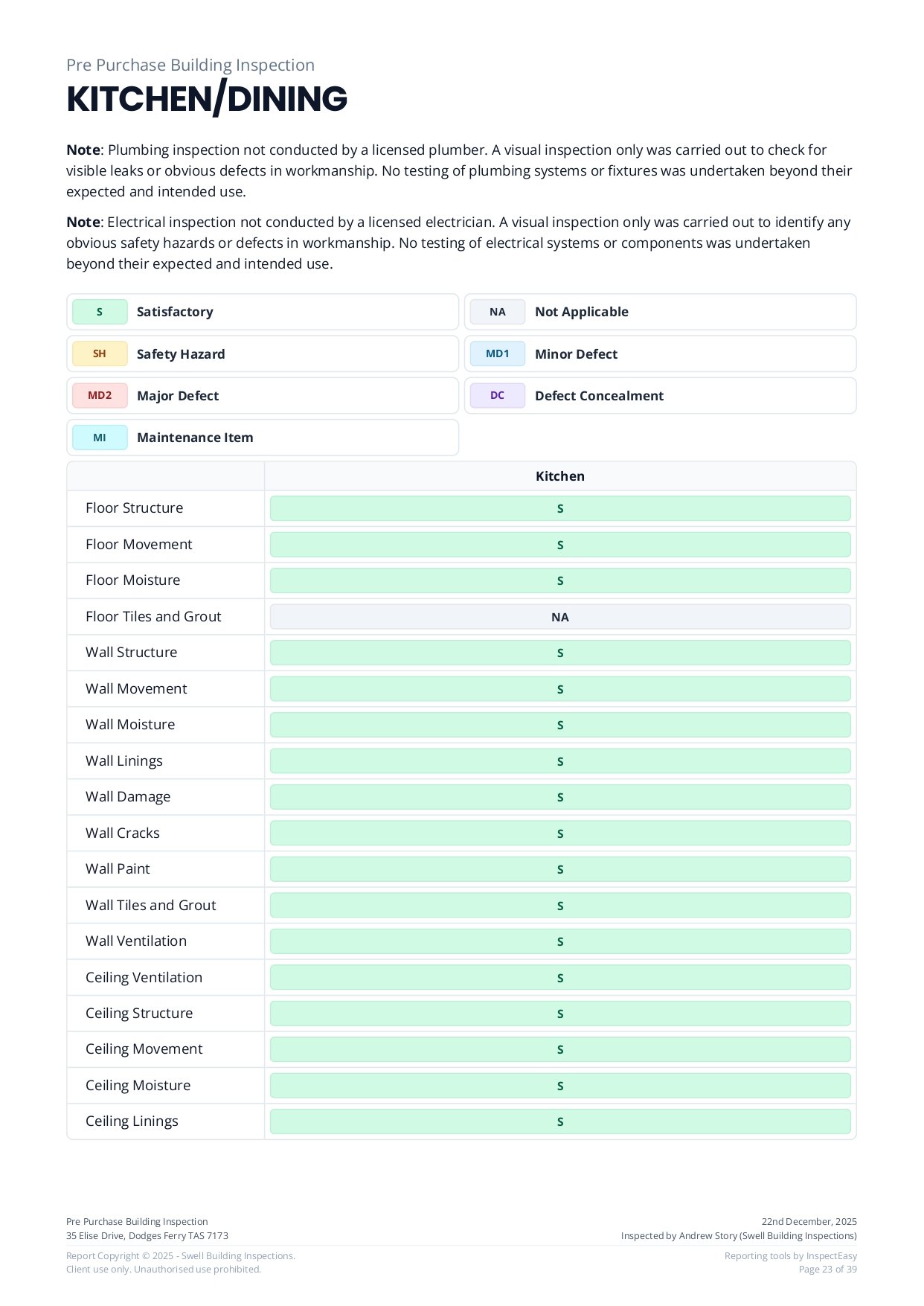
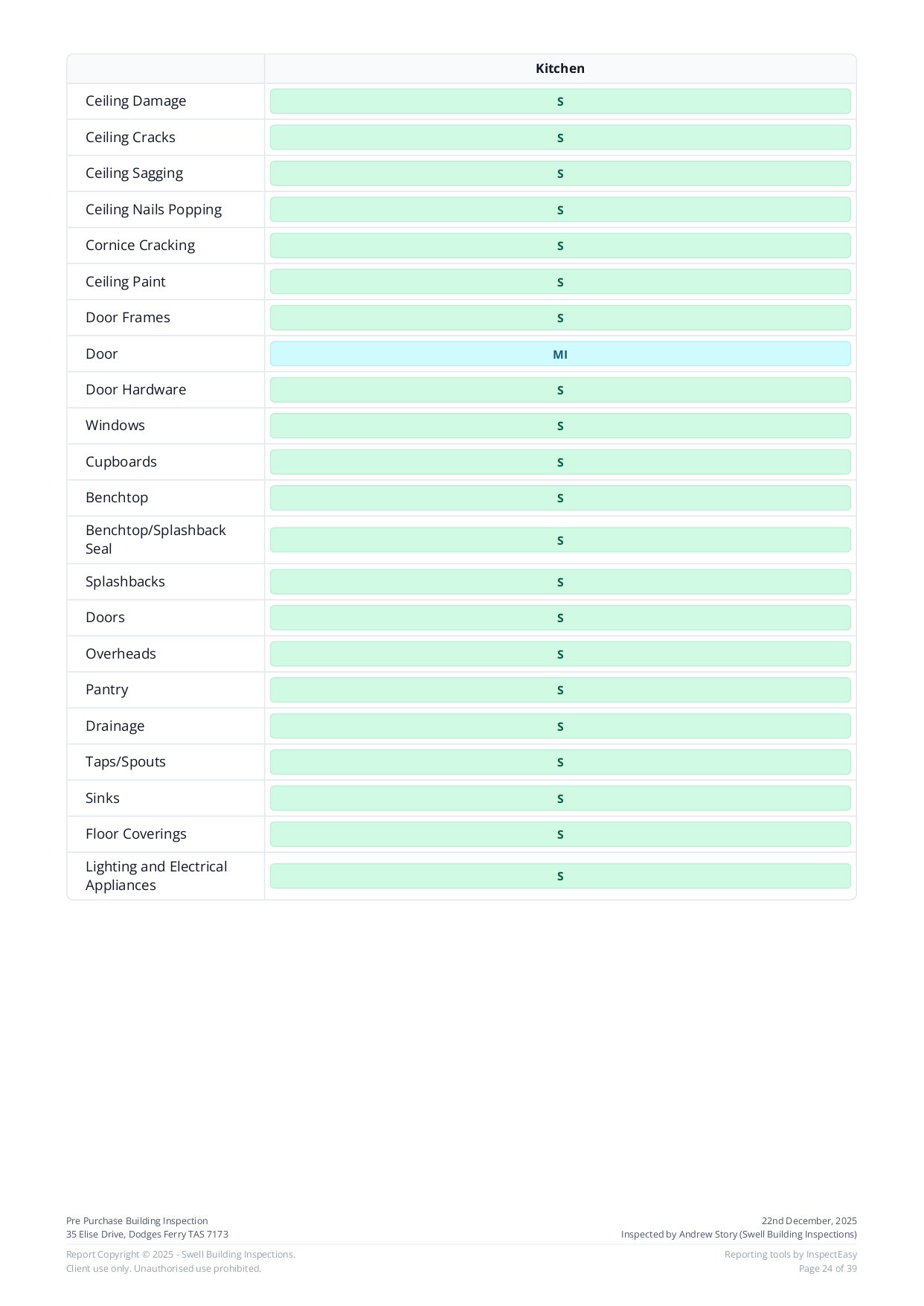
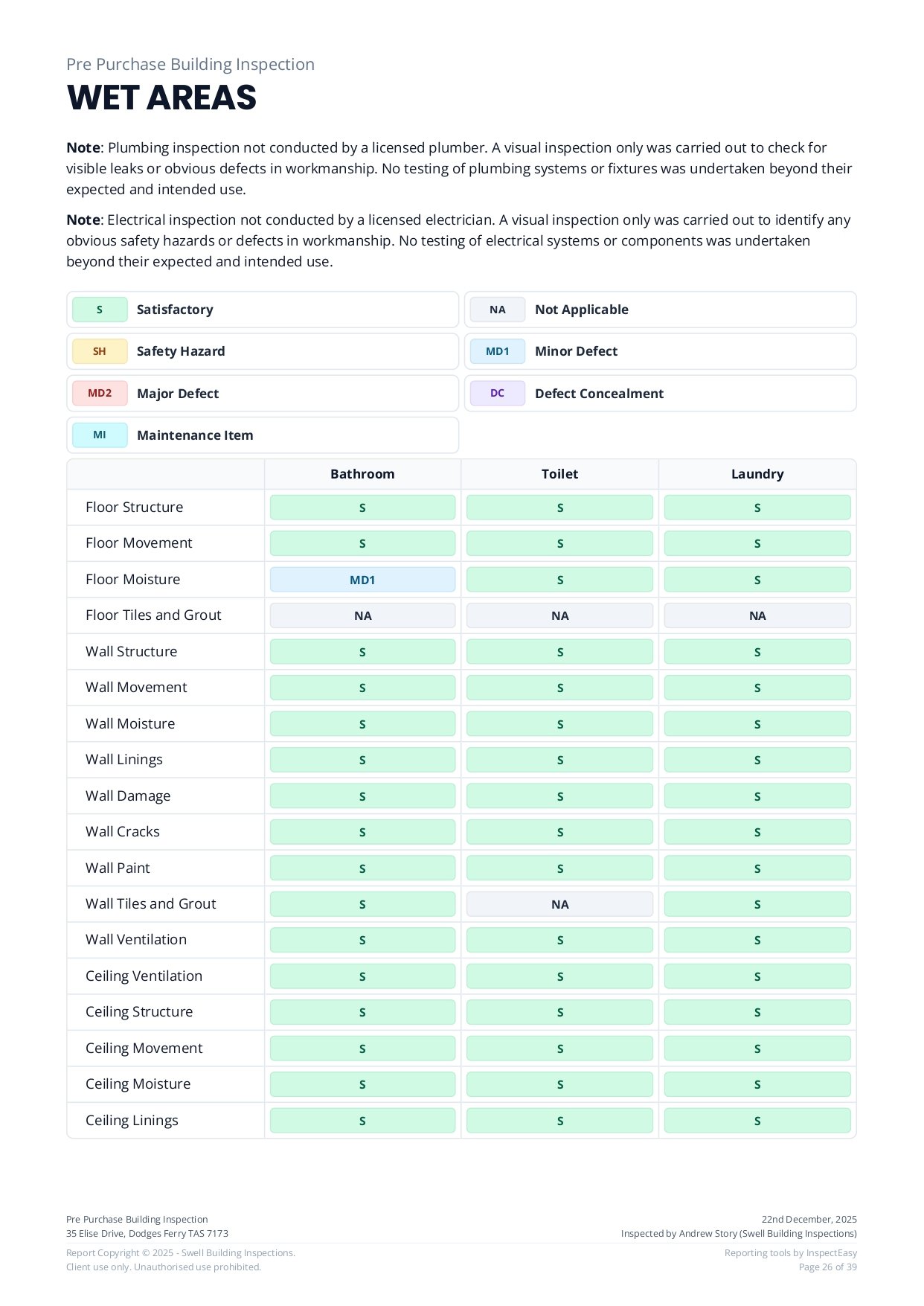
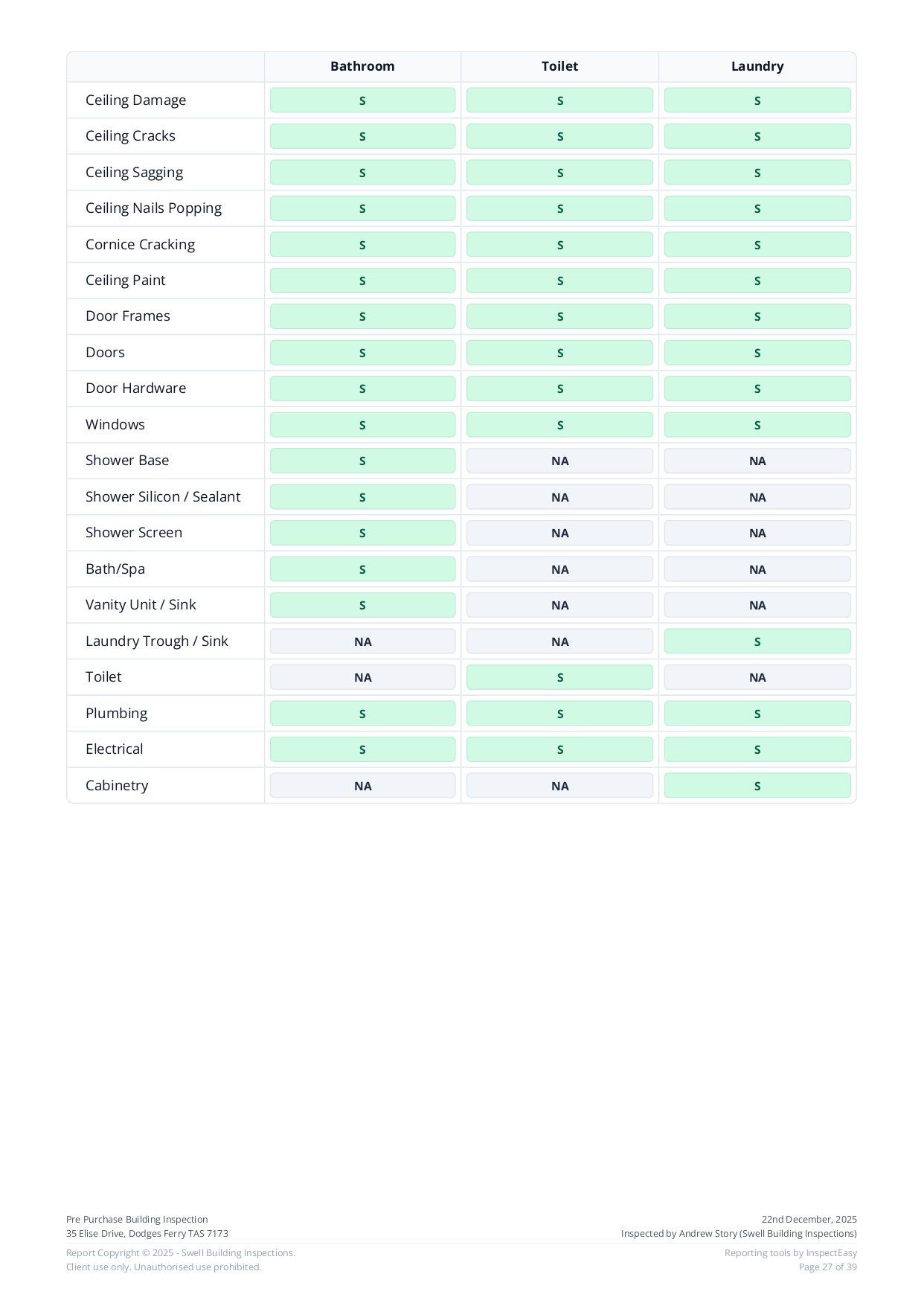
A PCI is a thorough, room-by-room assessment of the finished build. It’s not a quick glance — it’s a detailed review conducted against the Guide to Standards and Tolerances, Australian Standards, and the National Construction Code.
Here’s what a qualified inspector looks at:
The goal isn’t to be adversarial with your builder. It’s to create a clear, documented list of items that need attention so both parties know exactly what’s outstanding before final payment is made.
Not every issue found during a PCI is a deal-breaker. The key is understanding the difference between a cosmetic touch-up and a genuine structural concern. Here’s a general guide:
| Defect Type | Severity | Potential Impact | Typical Repair Cost |
|---|---|---|---|
| Minor paint imperfections | Low | Cosmetic only | $200 – $500 |
| Cracked or chipped tiles | Low–Med | Aesthetic; may worsen over time | $300 – $1,500 |
| Poor grouting or silicone in wet areas | Medium | Water ingress risk | $500 – $3,000 |
| Subfloor moisture issues | Medium–High | Timber damage, mould risk | $2,000 – $10,000 |
| Waterproofing failure in bathroom | High | Structural damage, mould, costly remediation | $5,000 – $20,000+ |
| Structural movement or cracking | High | Structural instability | $10,000+ |
Note: These are general estimates only. Actual costs depend on the scope of the issue and local trade rates.
At Swell Building Inspections, every practical completion inspection is carried out by a qualified builder – not just someone with a clipboard. That means we’re not only identifying visible defects. We understand why they’ve occurred and what they might lead to if left unaddressed.
Here’s how the process works:
Once your builder notifies you that the build is approaching practical completion, get in touch. We’ll have a quick call to understand your build, any concerns you have, and what to expect on the day.
We handle the scheduling directly, so you don’t have to chase anyone.
We conduct a thorough, unbiased assessment of the property using professional tools — including moisture meters and, for our Premium package, thermal imaging and optional shower flood testing.
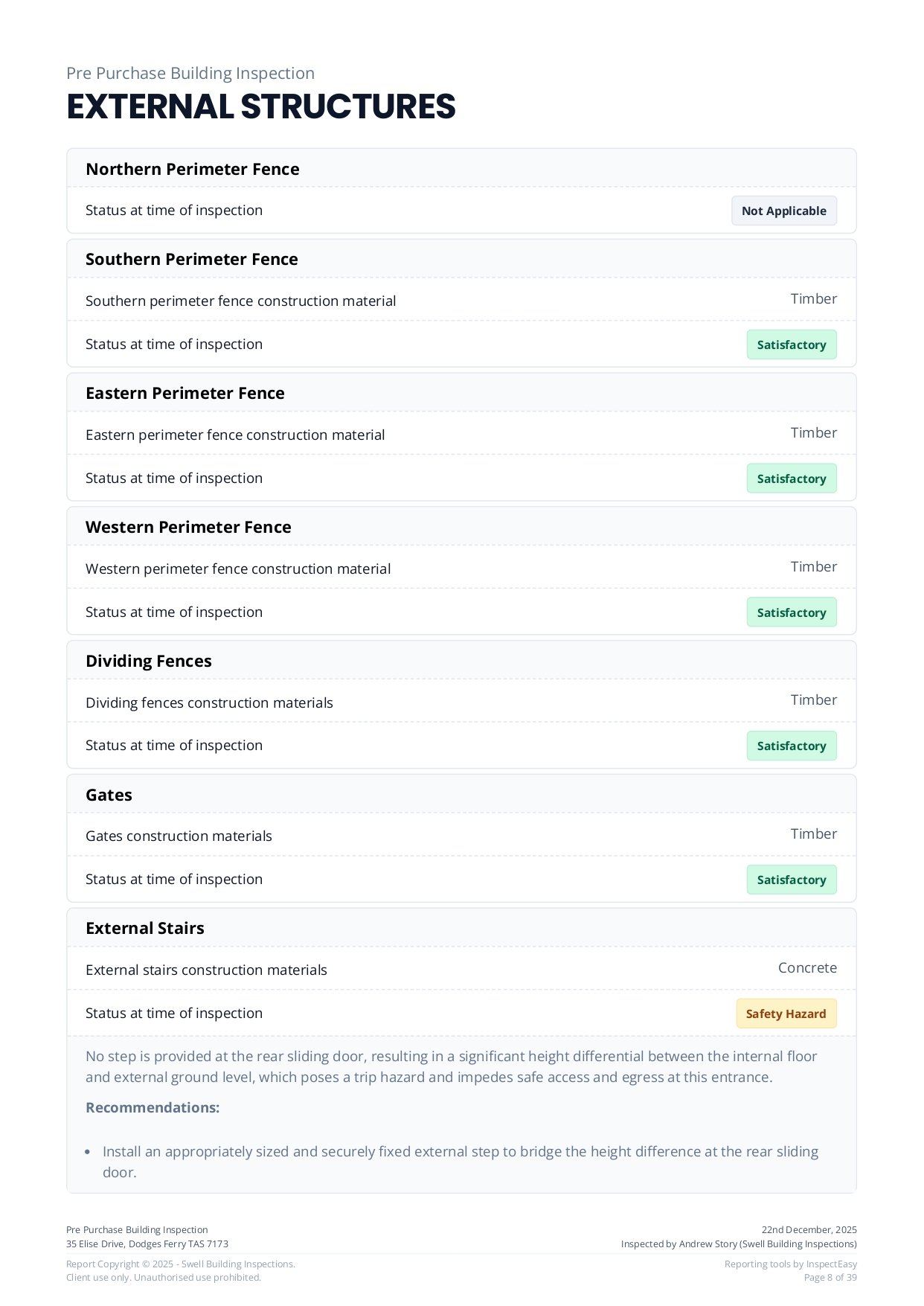
You’ll receive a clearly written, photo-supported report listing every defect identified, with references to the relevant standards. It’s designed to be handed directly to your builder.
Got questions about the report? We will call you to talk through the findings and work out your next steps.
| Standard — $770 | Enhanced — $990 | Premium — $1,650 | |
|---|---|---|---|
| Full PCI inspection | ✓ | ✓ | ✓ |
| Defect list with photos | ✓ | ✓ | ✓ |
| Standards & NCC references | — | ✓ | ✓ |
| Detailed written explanations | — | ✓ | ✓ |
| Thermal imaging | — | — | ✓ |
| Optional shower flood testing | — | — | ✓ |
All prices include GST & based on a standard 3-4 bedroom home. Subject to house size.
Even with a professional inspector on your side, there are a few things you can do to prepare:
Swell Building Inspections offers three packages starting from $770 (inc. GST) for a Standard inspection, $990 for an Enhanced inspection with detailed standards references, and $1,650 for a Premium inspection that includes thermal imaging and optional shower flood testing.
Book as soon as your builder notifies you that the build is approaching practical completion – ideally before the formal handover walk-through. This gives you time to review the report and request any rectification work before making your final payment.
Yes. The report provides documented evidence of defects that your builder is responsible for fixing before handover. Most builders will use the report as a rectification checklist. If a dispute arises, the report also serves as credible evidence for formal resolution.
A pre-purchase inspection assesses an existing home before you buy it. A practical completion inspection is specifically for new builds or major renovations – it checks that the construction work has been completed properly and in line with your contract, the Building Code of Australia, and relevant Australian Standards.
If major defects are identified, you should raise them with your builder before signing off on practical completion. Your builder is responsible for rectifying defects before handover. In Tasmania, if the builder doesn’t address the issues, the building surveyor can issue a written direction requiring compliance. If that fails, the matter can be escalated through Consumer, Building and Occupational Services (CBOS) or the Tasmanian Civil and Administrative Tribunal (TASCAT).
Yes. New homes are not immune to defects. Construction quality depends on the individual tradespeople who did the work and how well they were supervised. An independent inspection picks up issues that are easy to miss if you don’t know exactly what to look for, and it protects you before the final payment changes your position.
Building a home is likely the biggest financial commitment you’ll make. A practical completion inspection is a small investment that protects a very large one. It gives you clarity on the true condition of the build, documented evidence to work with your builder, and confidence that your home has been finished to the standard you’re paying for.
If your new Hobart home is approaching handover, talk to Swell Building Inspections. We’re qualified builders who inspect with a builder’s eye, and we’re here to make sure you move in with confidence, not concerns.