Builder License No:
512166802
512166802

One buyer posted on Reddit after a frustrating run of property inspections. Almost every building report came back with waterproofing problems: upstairs balconies leaking into the house, showers and bathrooms showing leaks on thermal cameras, and balcony doors letting water in. Most of the homes were built from 2009 onwards.
“How common is this now?” they asked.
Andy from Swell Building Inspections answered it for host Jordan in our Pro Insights series: unfortunately, very common.
Here’s the short answer: failed waterproofing is one of the most common defects in homes built in the last 20 years. The usual culprits are showers (especially channel grates), balconies, and poorly flashed windows. Repairs range from around $4,000 for re-flashing windows to $45,000 or more when all three wet areas have failed.
You might expect older houses to have more water problems. In practice, homes built in the last 20 years often have more.
Modern construction depends heavily on a waterproofing membrane in wet areas and balconies. When that membrane is installed properly, it works well. When it’s done poorly and fails, there’s nothing else stopping the water, so it gets into the timbers, walls and floors.
“Every week we will see a wet area or a balcony that’s leaked,” Andy says. Some buyers have bad luck repeatedly. Andy has had clients whose first two properties both failed inspection for this reason.
Long, narrow channel grates (also called strip drains) are now a common feature in modern showers. According to Andy, they’re also the most common place he sees waterproofing fail in newer homes.
He recently inspected a beautiful home outside Hobart that was less than six years old. In the ensuite, either the substrate had moved or the channel grate had caused the membrane to fail where the two met. The owners had no idea. It had probably been leaking for a couple of years, and the timber framing underneath was starting to rot.
The shower had to be ripped out and rebuilt.
Waterproofing a house goes beyond membranes. External cladding and the flashings around windows and doors are part of it too.
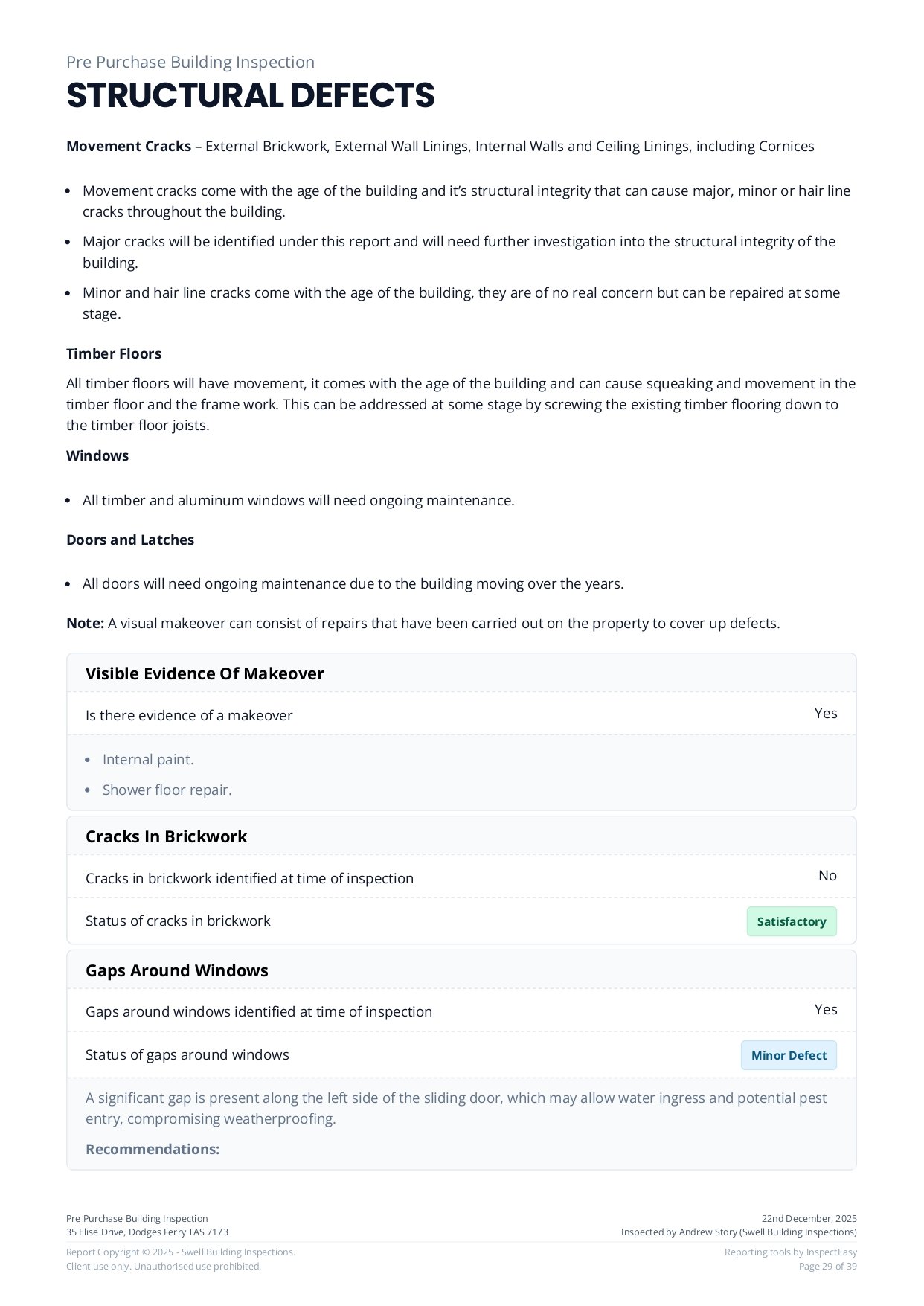
On one coastal property about 15 years old, two large windows on the weather-facing gable had been poorly flashed. Water had been getting in for years. From under the house, Andy found sections of flooring next to those windows completely rotted.
Balconies fail the same way. Poor flashing or waterproofing lets water seep into the floor inside, and the timber starts to break down.
These are Andy’s indicative figures from real inspections. Every job is different.
“A half-decent bathroom renovation these days, you’re not going to get change out of 25 grand,” Andy says.
The worst result Andy sees is a house only 10 to 15 years old where all three main wet areas have failed waterproofing and are affecting the subfloor or framing. The only fix is to redo all of them.
It’s not rare. On the morning this episode was recorded, Swell found exactly that on an inspection: a house in immaculate condition except for its three wet areas.
Andy’s advice is simple: get a building inspection from someone who will:
“You might pay a few hundred to get an inspection done, but you could save yourself 20 grand or more,” Andy says.
Sometimes problems are deliberately covered up. Sometimes they just haven’t become visible yet. Either way, an experienced builder is far more likely to find them.
When a defect needs specialist input, a good inspector will bring one in. Andy recently called in a balcony waterproofing specialist to assess a problem balcony with a client, and it was well worth it.
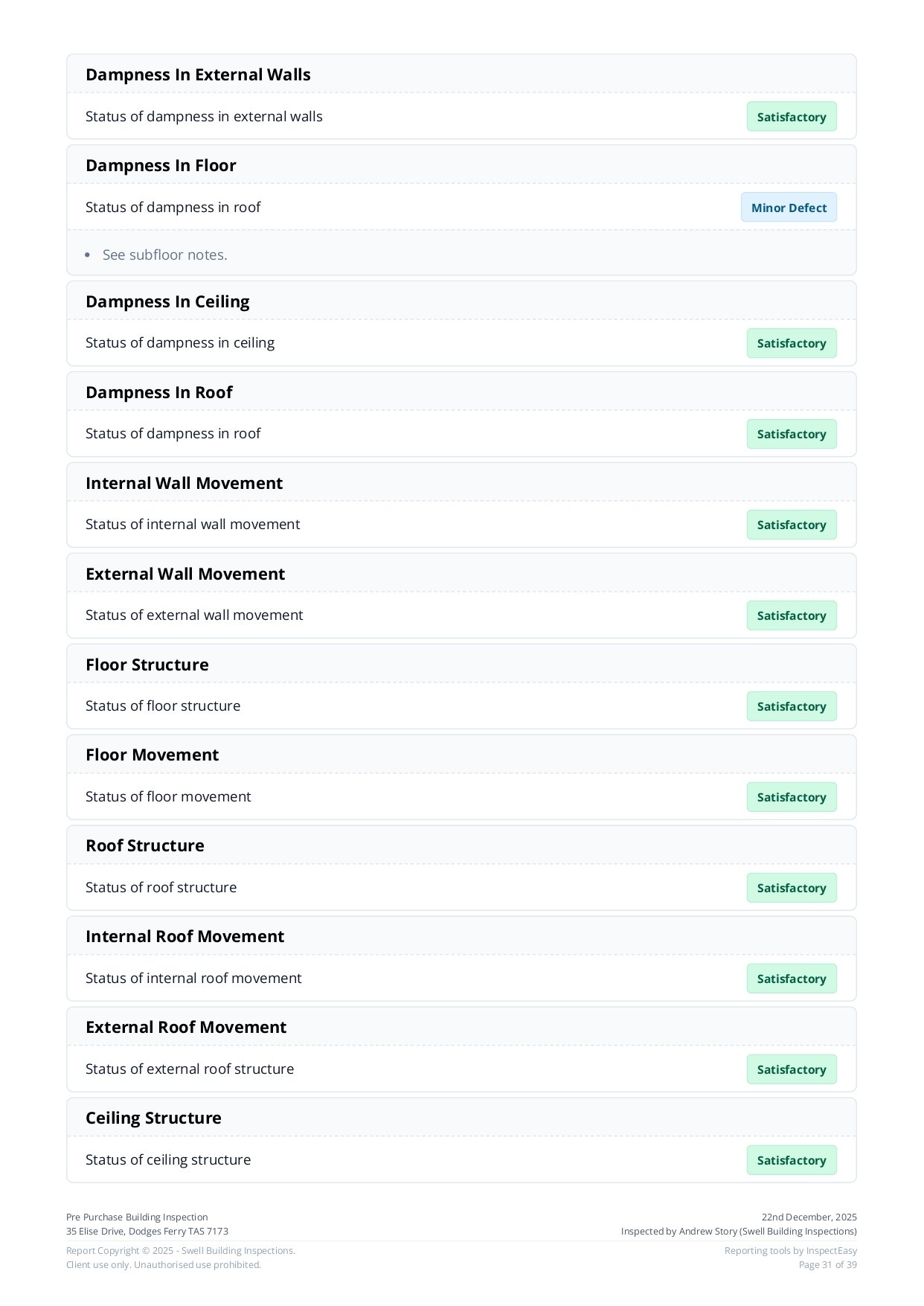
Andy doesn’t have exact statistics, but in his experience the most common and most expensive defects are nearly always water-related: failed shower waterproofing, leaking balconies, water through windows and failed roofs.
That’s why builders put so much detail into membranes and flashings, and why inspectors look so closely at them. Tasmania’s cool, wet climate adds to the pressure, which is why moisture testing is a core part of every Swell inspection.
Building new? Waterproofing is one of the key things to check before you accept the keys. Our practical completion inspection guide explains what to look for at handover.
Very common. Swell sees a leaking wet area or balcony nearly every week, often in homes built within the last 20 years.
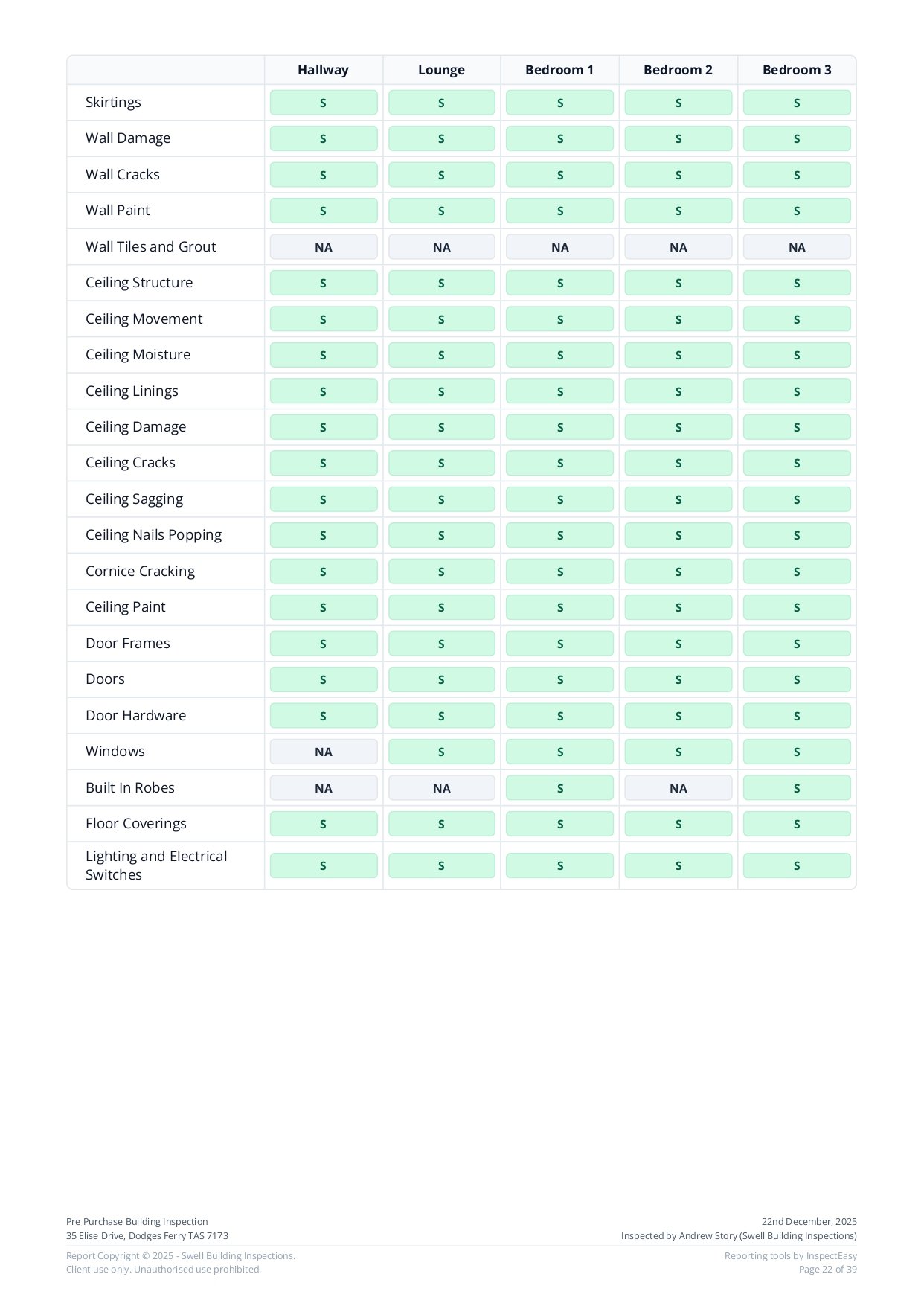
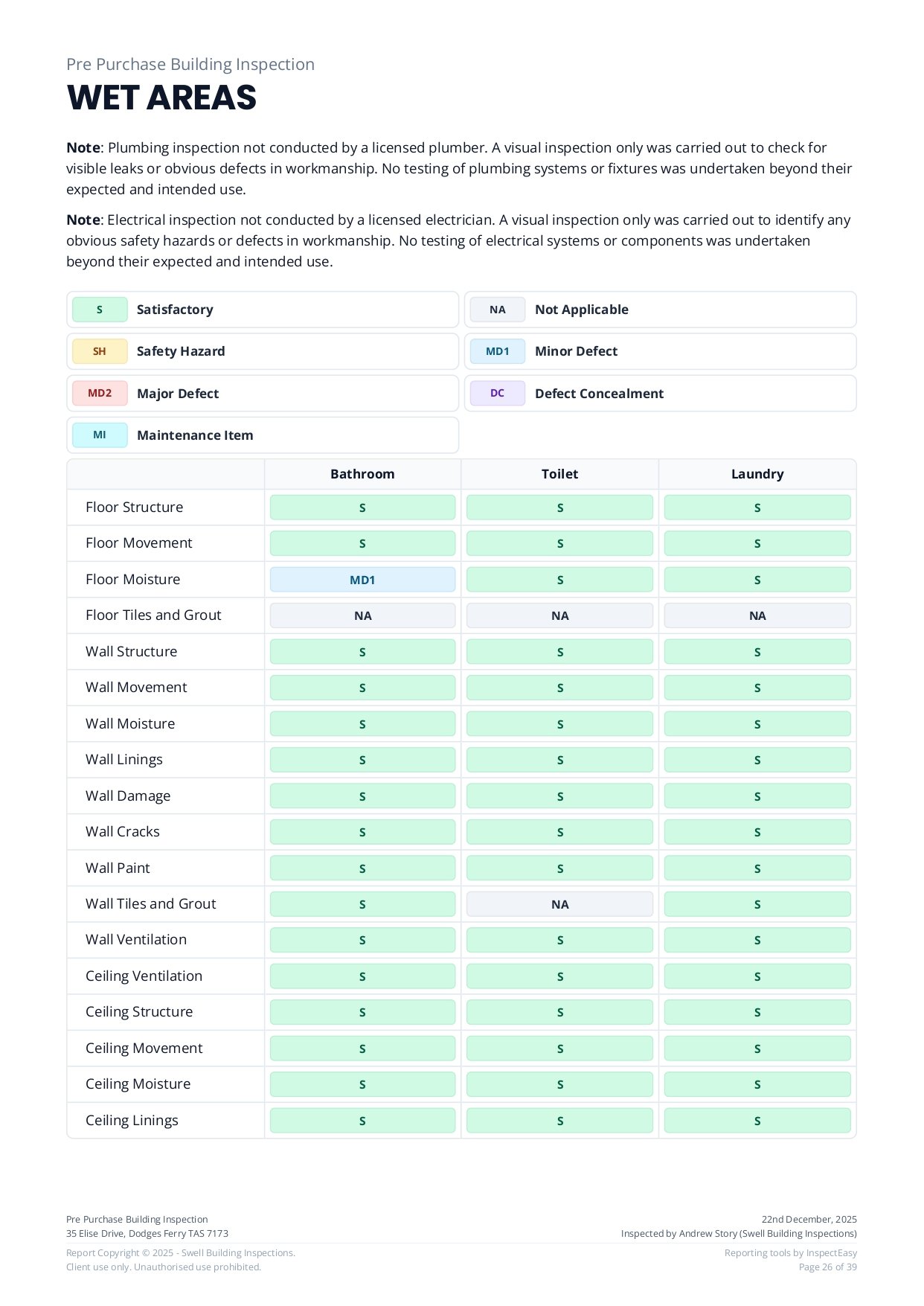
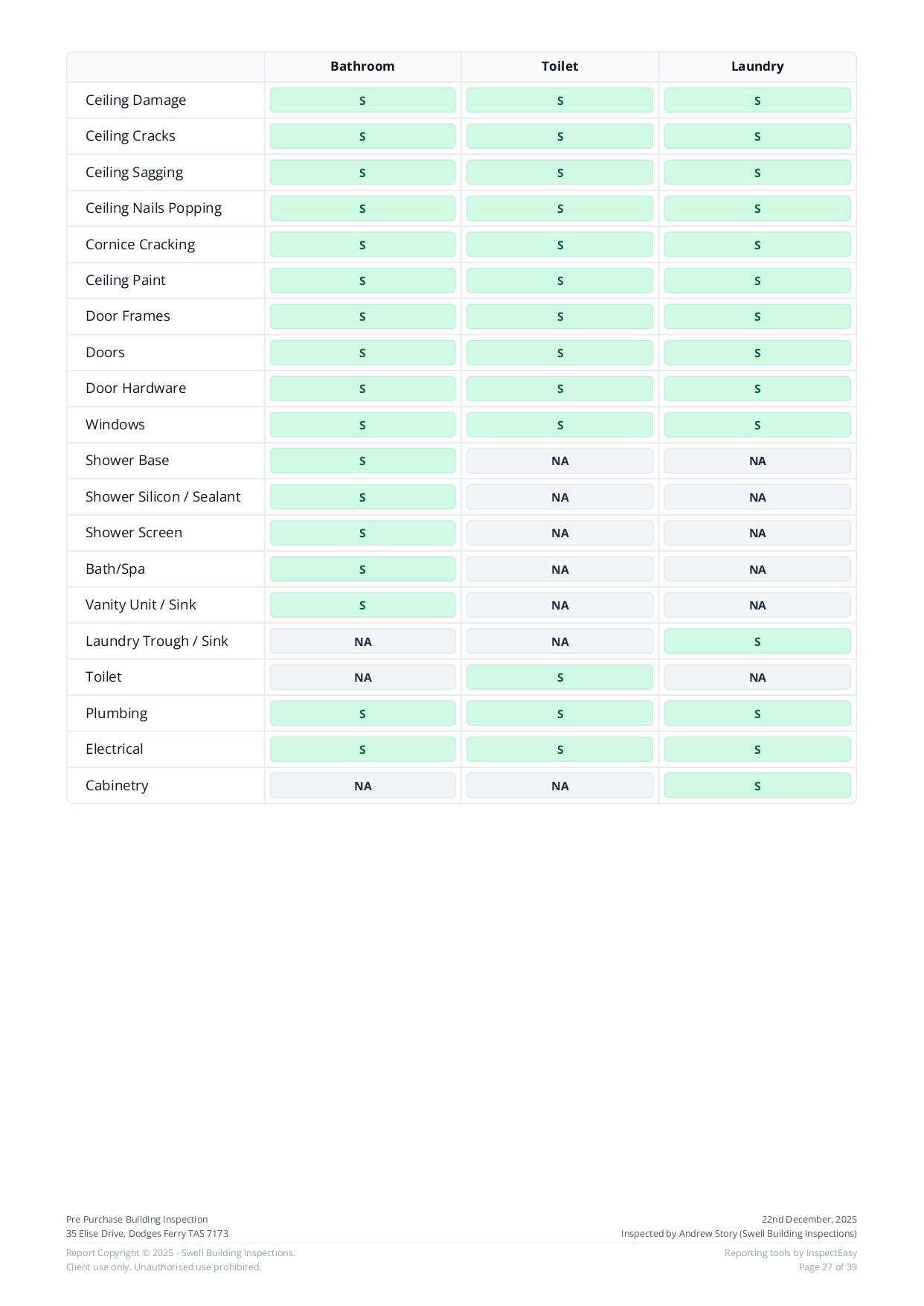
Swollen or stained skirting boards and door frames near the bathroom, loose or drummy tiles, mould, musty smells, and high moisture readings. Under the house, look for damp or rotting timber beneath the shower.
Rebuilding a single shower can cost around $7,500 to $12,000. A full bathroom renovation is often $20,000 to $25,000 or more.
Often, yes. Inspectors use moisture meters, thermal imaging and subfloor inspections to find leaks, including some that aren’t yet visible.
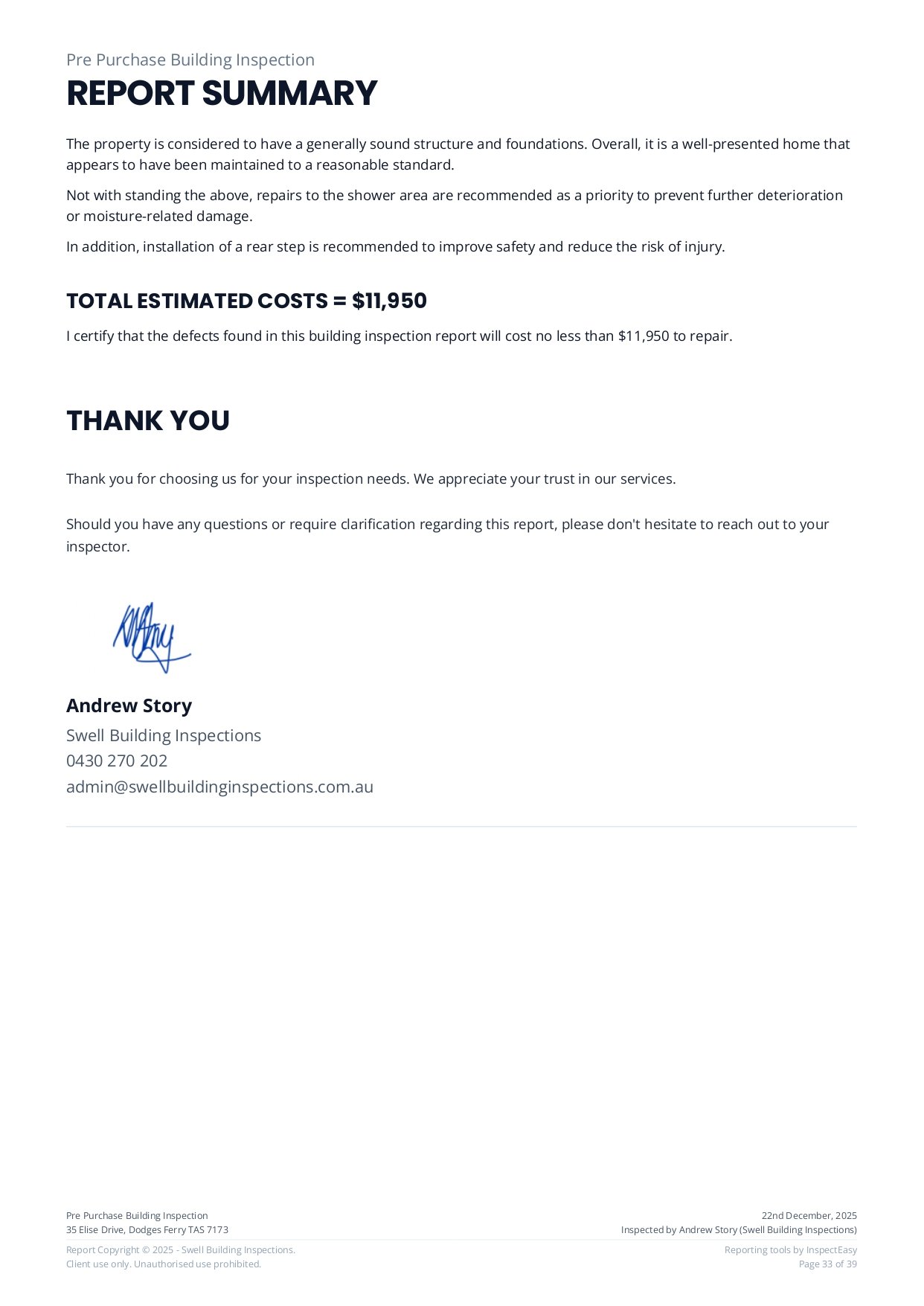
Waterproofing failures are common, expensive, and often hidden until the damage is done. A few hundred dollars for an inspection can save you $20,000 or more. Andy gets under the house, tests the wet areas with moisture meters (and thermal imaging where relevant), and checks flashings and balconies, so a hidden leak doesn’t become your $50,000 surprise.
Andy is a licensed builder with over 15 years of hands-on experience. Every Swell inspection comes with a plain-English report, usually within 24 hours, and a follow-up call to walk you through the findings. See our 2026 Hobart pricing guide for inspection costs.
Ready to book? Book your pre-purchase inspection or call 0483 935 688.